How to Create a Gallery Wall in Your Living Room

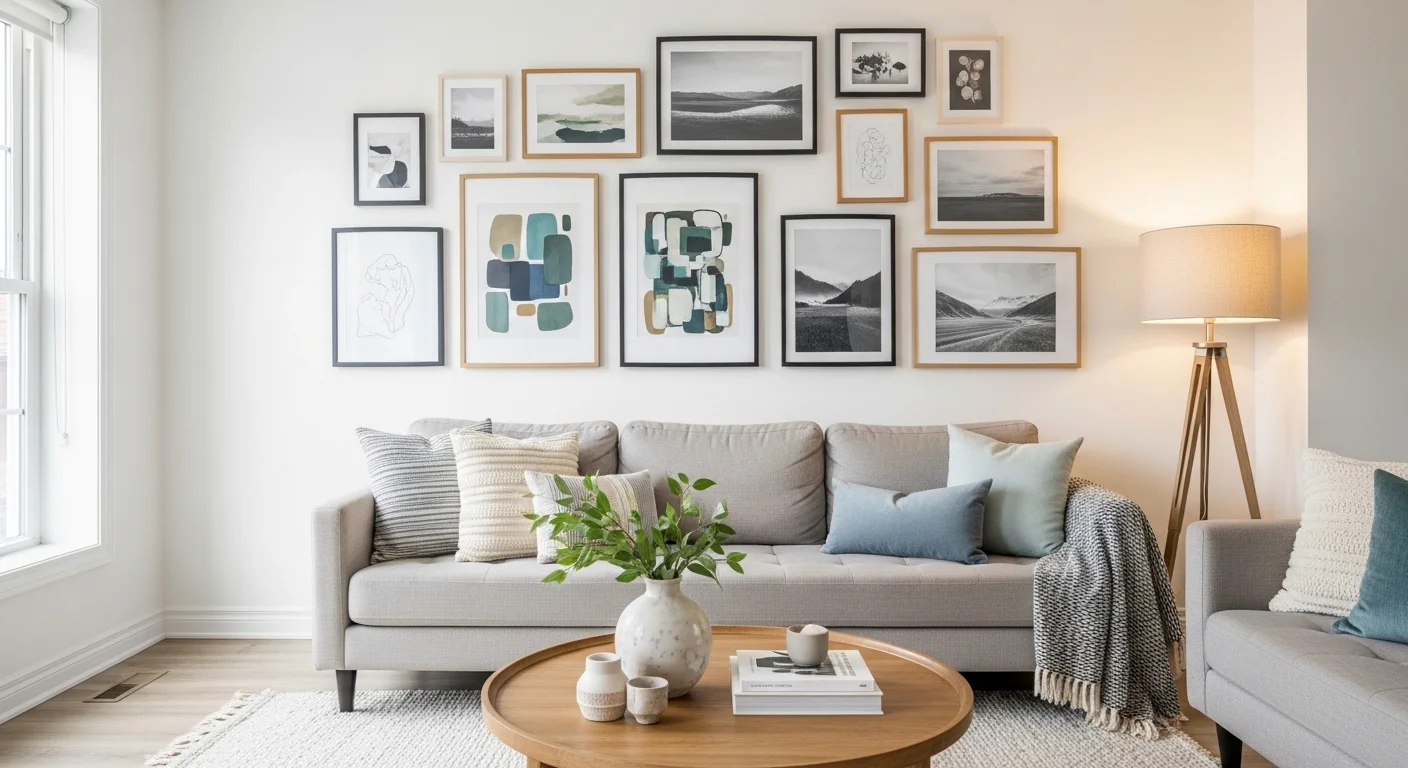
A gallery wall is one of the most powerful ways to transform a living room from plain to personal. It’s more than just hanging frames on a wall, it’s a curated visual story that reflects your taste, memories, and design sensibility. When done right, a gallery wall can become the focal point of your living space, adding warmth, character, and depth without requiring a full renovation.
As a home décor expert, I’ve seen gallery walls succeed beautifully—and fail—based on planning alone. This guide will walk you step by step through creating a gallery wall that looks intentional, balanced, and timeless.
What Is a Gallery Wall?
A gallery wall is a collection of framed artwork, photographs, prints, or decorative objects arranged together on a single wall. Unlike a single large artwork, a gallery wall allows you to mix sizes, styles, and mediums to create visual interest.
Gallery walls work especially well in living rooms because they:
- Fill empty wall space without overwhelming the room
- Showcase personality and personal memories
- Adapt to both small and large living spaces
- Evolve easily over time
Step 1: Choose the Right Wall
Not every wall is ideal for a gallery display. The best walls are those that naturally draw attention without competing with major design elements.
Ideal spots include:
- Above the sofa
- Behind a console table
- Around or above a fireplace
- A large blank wall opposite windows
Avoid walls already crowded with doors, switches, or heavy shelving. A clean visual background allows your gallery to shine.
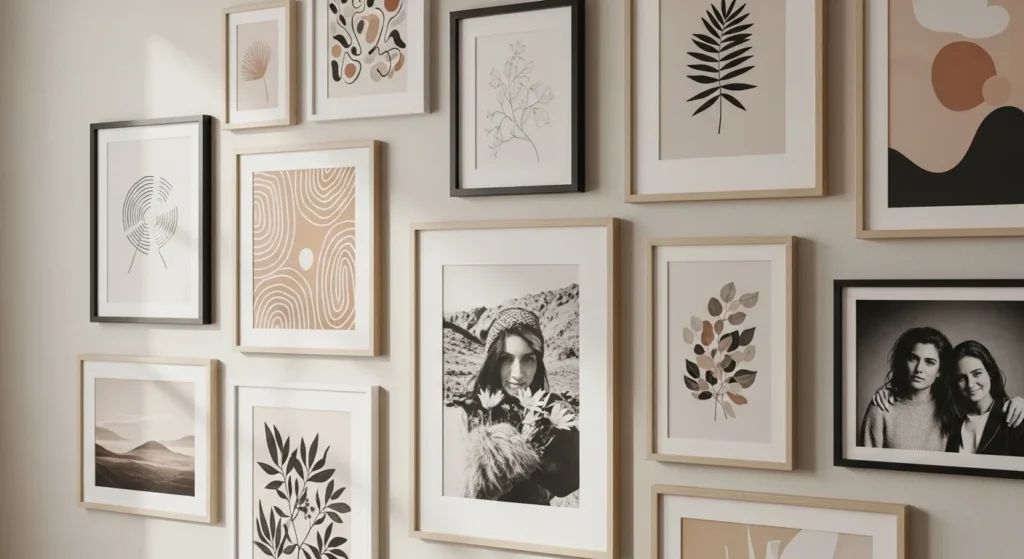
Step 2: Decide on a Gallery Wall Style
Before selecting frames or art, decide on the overall style. This ensures cohesion and prevents the wall from looking random.
Popular gallery wall styles include:
1. Symmetrical Grid
Perfect for modern and minimalist living rooms. Frames are evenly spaced and usually the same size.
2. Organic or Free-Form
A relaxed, eclectic look with varying frame sizes and spacing. Ideal for boho, traditional, or cozy interiors.
3. Centered Anchor Piece
One large statement artwork in the center, surrounded by smaller frames.
4. Linear or Horizontal
Frames arranged in a straight line, great for narrow walls or above sofas.
Choose a style that complements your existing furniture and décor rather than fighting it.
Step 3: Select Artwork With Meaning
A gallery wall should feel personal, not generic. While store-bought prints are fine, mixing in meaningful elements adds authenticity.
Good options include:
- Family photos or travel memories
- Art prints or illustrations
- Black-and-white photography
- Typography or quote art
- Vintage finds or sketches
Stick to a consistent color palette so the wall feels unified, even if the art styles differ.
Step 4: Pick Frames That Work Together
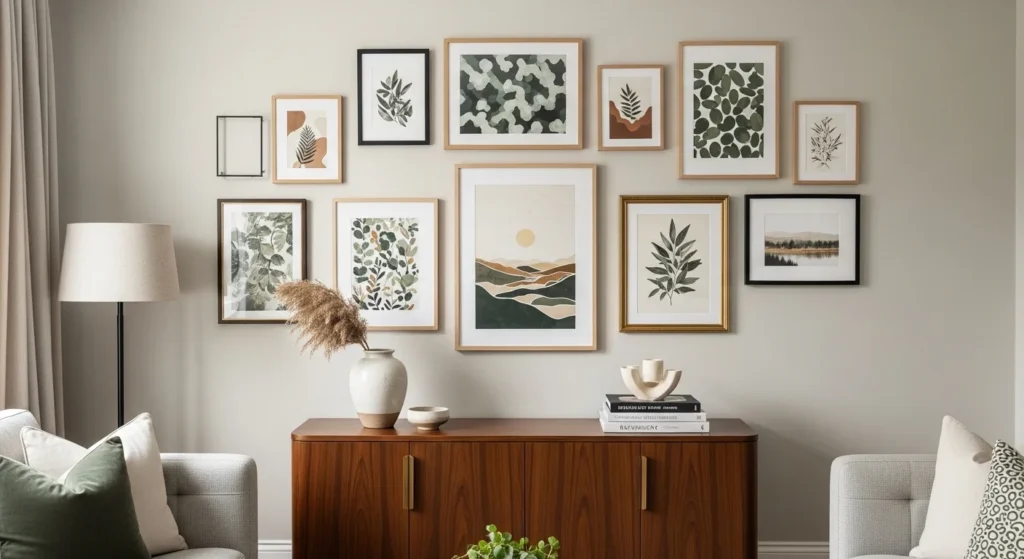
Frames act as the visual glue of your gallery wall. They don’t need to match perfectly—but they should relate.
Frame tips from experience:
- Limit yourself to 2–3 frame colors (e.g., black, wood, gold)
- Use similar frame depths for a polished look
- Matte finishes photograph better and reduce glare
- White mats help unify different artwork styles
For a clean, professional appearance, consistency matters more than variety.
Step 5: Plan the Layout Before Hanging
This is the most critical step—and the one most people skip.
Before putting any nails in the wall:
- Lay all frames on the floor
- Arrange them until spacing feels balanced
- Take a photo for reference
A pro trick is to trace frames onto paper, cut them out, and tape them to the wall. This lets you visualize spacing and make adjustments without damage.
Ideal spacing:
Keep 2–3 inches between frames for a cohesive look.
Step 6: Get the Height Right
A beautifully curated gallery can still look wrong if it’s hung too high.
Expert rule of thumb:
The center of your gallery wall should be at eye level—about 57 to 60 inches from the floor.
If hanging above a sofa, leave 6–8 inches between the top of the sofa and the lowest frame.
Step 7: Use Proper Hanging Tools
Using the right hardware ensures safety and long-term durability.
Recommended tools:
- Picture hooks or wall anchors for heavier frames
- Level and measuring tape
- Pencil for marking placement
- Command strips for lightweight frames or rentals
Step 8: Balance With the Rest of the Room
Your gallery wall should feel connected to the living room, not separate from it.
Tie it together by:
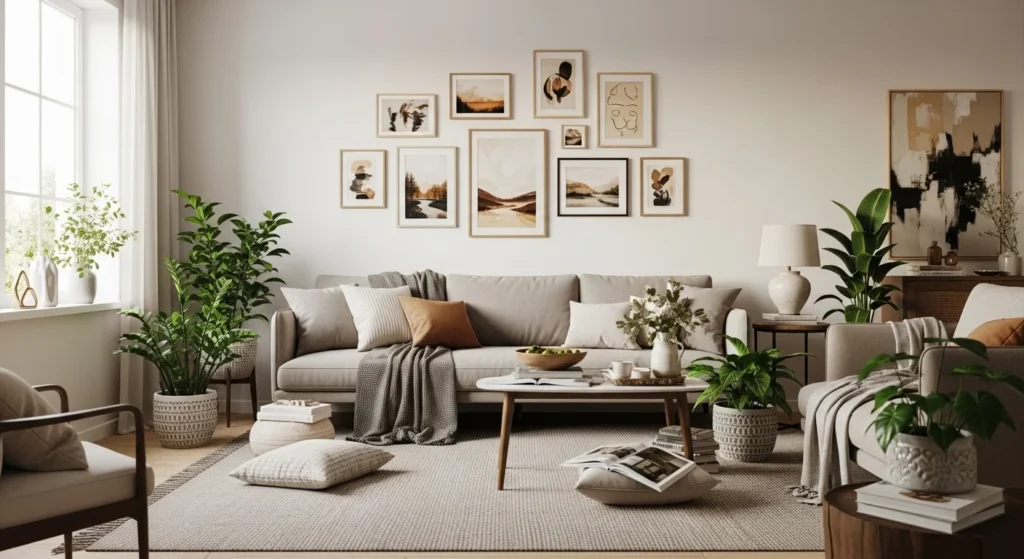
- Echoing colors from cushions, rugs, or curtains
- Aligning the gallery width with furniture below
- Leaving breathing space around the display
A gallery wall works best when it feels like part of the overall design story.
Common Gallery Wall Mistakes to Avoid
From years of styling interiors, these are the most frequent mistakes homeowners make:
- Hanging frames too high
- Using too many unrelated frame styles
- Crowding frames with uneven spacing
- Ignoring the room’s color palette
- Rushing the layout without planning
Avoiding these instantly elevates the final result.
How to Refresh a Gallery Wall Over Time
One of the biggest advantages of a gallery wall is flexibility. You don’t need to redo everything to keep it fresh.
Easy updates include:
- Swapping seasonal prints
- Replacing photos as memories grow
- Adding one new piece each year
- Changing mats while keeping frames
This approach keeps your living room evolving without major cost.
Final Thoughts
Creating a gallery wall in your living room is both an art and a strategy. When thoughtfully planned, it enhances your space, reflects your personality, and adds lasting visual interest. By choosing the right wall, planning your layout carefully, and curating meaningful artwork, you can achieve a professional, magazine-worthy look—without hiring a designer.
A well-designed gallery wall doesn’t just decorate your living room. It tells your story.