15 Creative 70s Interior Design Retro Look Ideas for Style

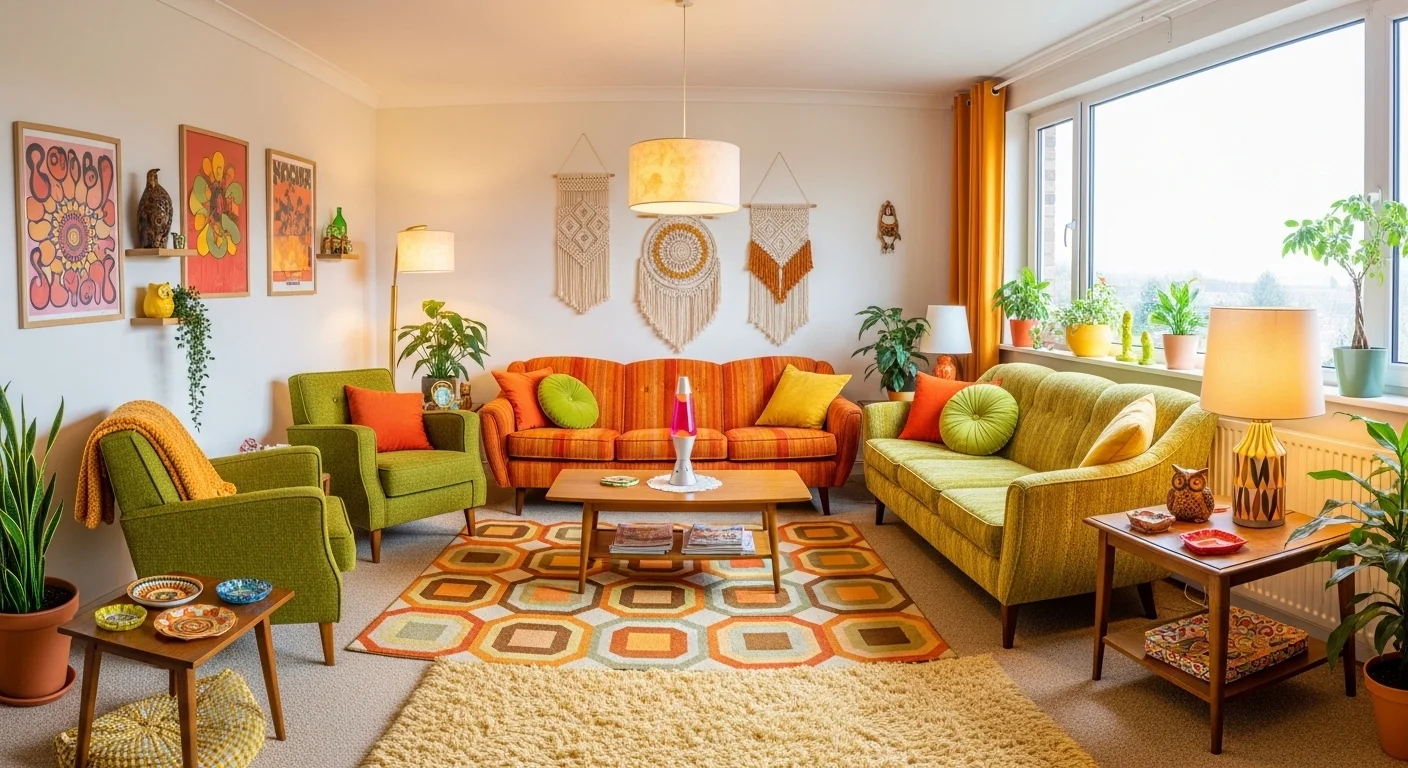
The 1970s were a decade of bold design choices, vibrant colors, and unique home decor trends that still inspire interiors today.
Incorporating a 70s interior design retro look can add warmth, personality, and nostalgia to any modern living space.
Retro furniture, geometric patterns, and textured fabrics can make a room feel both playful and stylish at the same time.
By exploring classic 70s design elements, homeowners can create spaces that balance vintage charm with contemporary functionality.
This guide will share 15 creative ideas to help you achieve a striking 70s-inspired home, complete with practical tips for modern use.
Understanding 70s Interior Design Retro Look
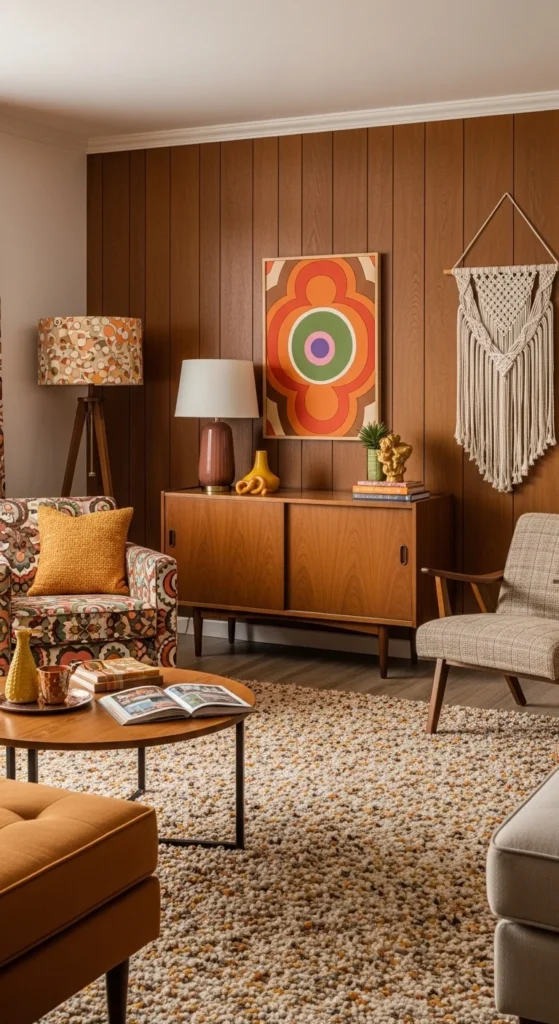
The 1970s interior design aesthetic was defined by bold experimentation in colors, textures, and furniture shapes.
Designers embraced warm earthy tones, vivid accent colors, and eclectic patterns that reflected cultural and artistic influences of the time.
Materials such as wood paneling, shag carpets, rattan, and macrame brought tactile depth and organic warmth to living spaces.
Retro designs often included statement lighting, low-profile furniture, and layered textures that created visual richness and cozy atmospheres.
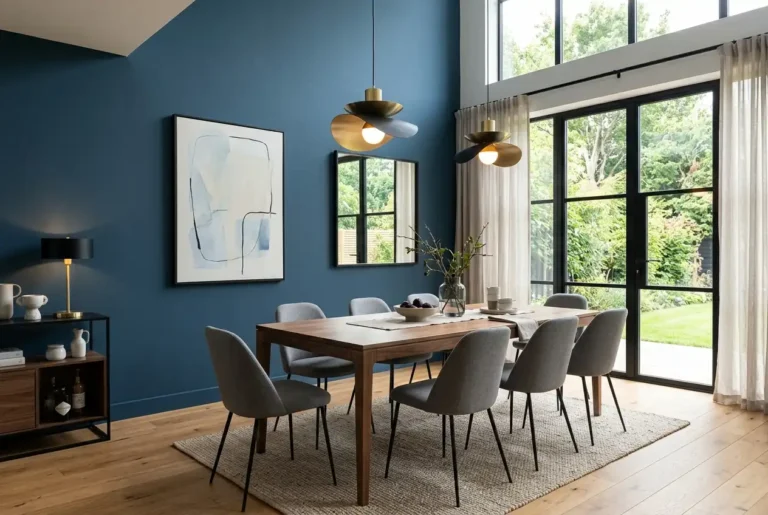
Understanding these elements helps homeowners integrate a 70s interior design retro look without making spaces feel outdated or cluttered.
Essential elements to Achieve a 70s Retro Look
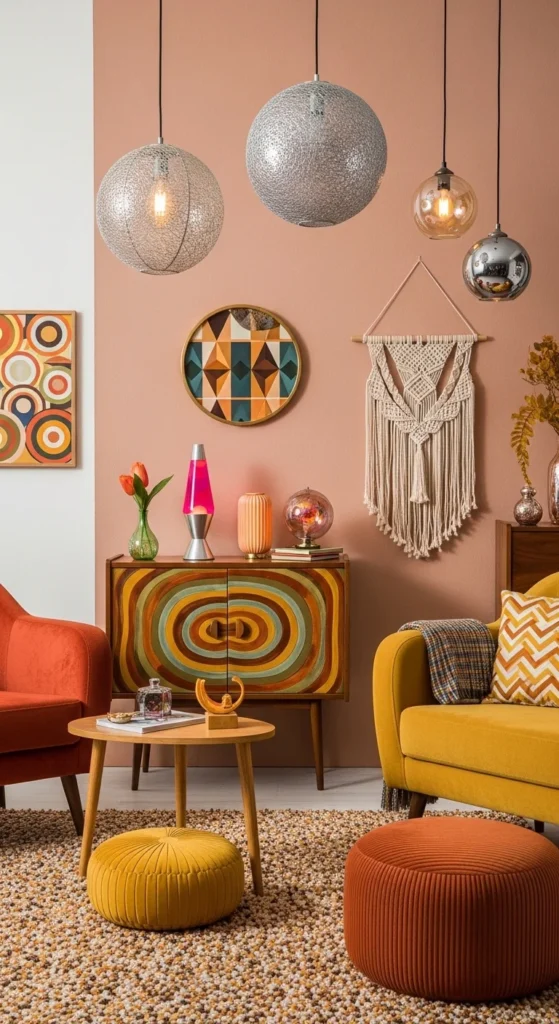
Key elements include vibrant color palettes, geometric prints, textured fabrics, and vintage-inspired furniture shapes.
Warm, earthy tones combined with bold accents can instantly evoke nostalgia while keeping interiors lively and inviting.
Shag rugs, velvet upholstery, and macrame wall hangings add texture and visual interest, reflecting authentic 70s style.
Lighting choices like lava lamps, globe pendants, and metallic fixtures provide both ambiance and retro character.
Balancing retro pieces with contemporary decor ensures that your design remains stylish, functional, and suitable for modern living spaces.
1. Bold earthy Color Palettes
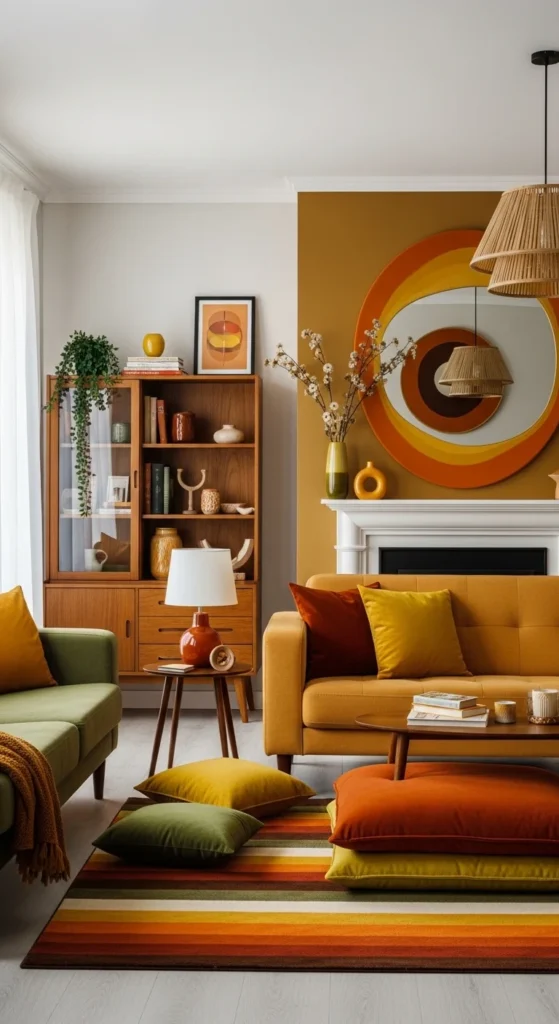
Earthy tones defined many 1970s interiors, with shades like mustard yellow, burnt orange, olive green, and deep brown creating a cozy atmosphere.
Pairing these colors with neutral walls, wooden furniture, or subtle accent pieces prevents the room from feeling overwhelming.
Accent walls or statement furniture in bold hues instantly convey retro style while maintaining modern harmony.
Layering complementary shades in cushions, rugs, and decor items enhances warmth and visual depth throughout the space.
Incorporating earthy tones in a 70s interior design retro look ensures authenticity while allowing flexibility for contemporary design updates.
2. Statement Geometric Patterns
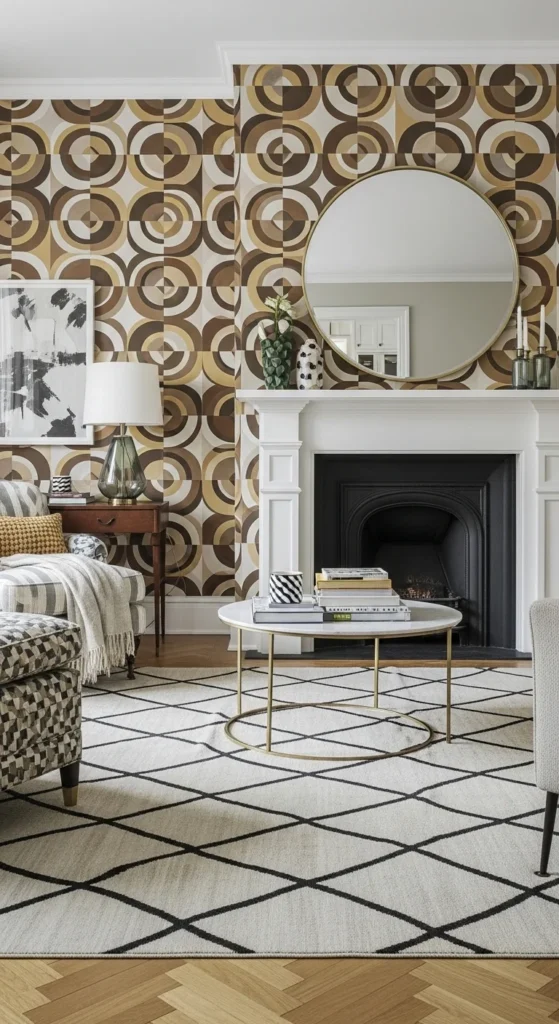
Geometric patterns were iconic in 70s interiors, appearing on wallpapers, rugs, and upholstery in bold, repetitive designs.
These patterns create energy and visual interest, giving rooms a lively yet structured aesthetic.
Mixing patterns carefully with neutral furnishings prevents visual clutter while highlighting retro charm.
One dominant geometric element per room often works best, maintaining focus and balance in the space.
Geometric prints can complement modern interiors while reinforcing the playful, distinctive character of a 70s interior design retro look.
3. Shag Carpets and Textured Rugs
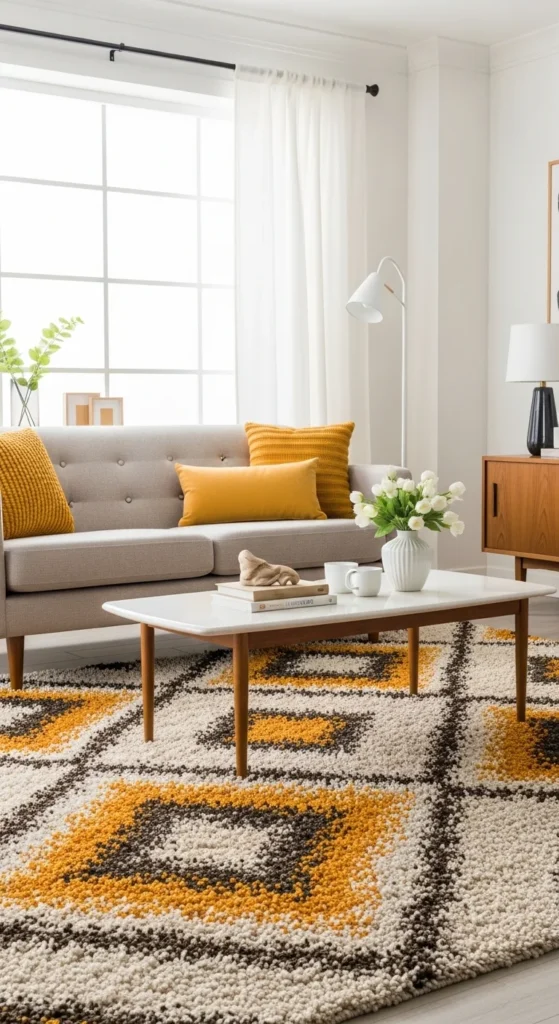
Shag carpets were a staple of 1970s living rooms, adding softness, warmth, and tactile richness underfoot.
Textured rugs continue to provide depth and comfort while creating an authentic retro vibe in modern homes.
Choosing colors and pile height strategically ensures the rug enhances rather than overwhelms the surrounding furniture.
Combining textured rugs with minimalist decor balances vintage charm with a clean, modern aesthetic.
A carefully selected shag carpet can act as a central feature, instantly reflecting a 70s interior design retro look in any room.
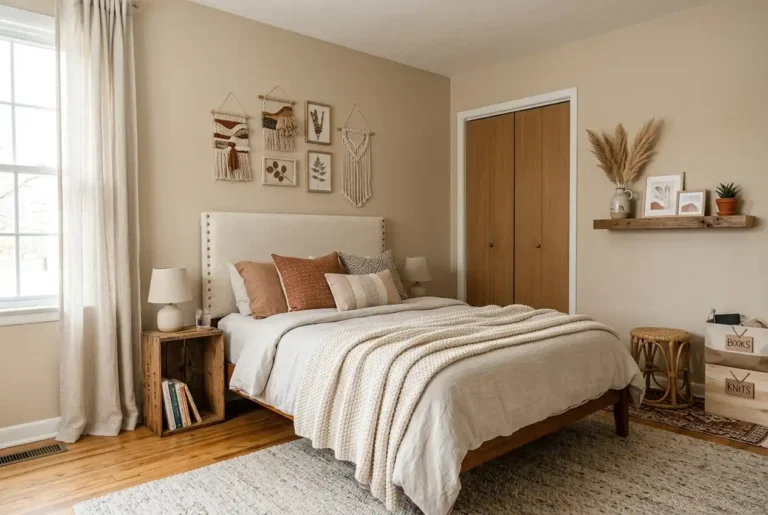
4. Macrame Wall Hangings
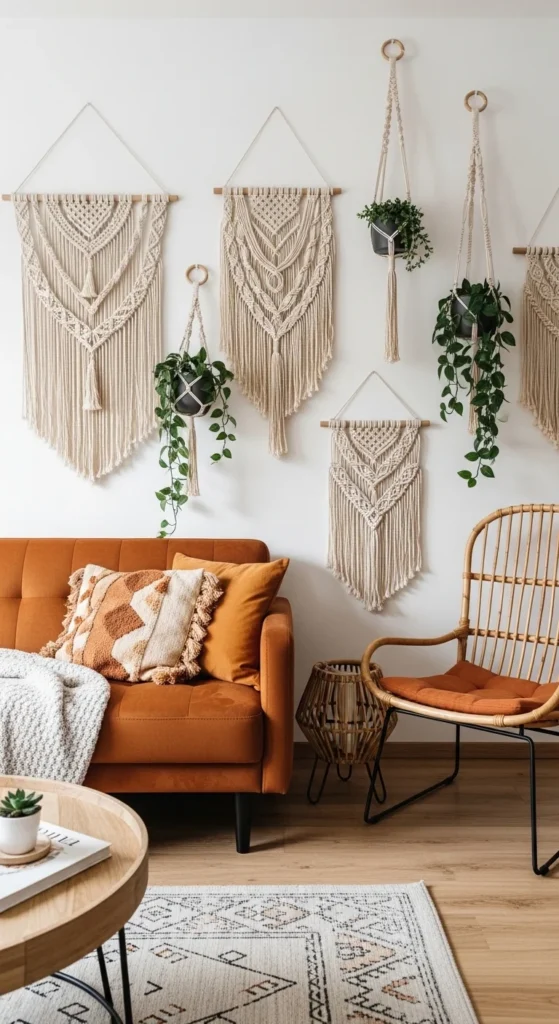
Macrame became a popular decorative craft in the 1970s, adding bohemian flair and intricate patterns to walls.
These handcrafted pieces serve as visual focal points while introducing texture and warmth to living spaces.
Macrame can be displayed as wall art, plant hangers, or even room dividers for a functional yet stylish touch.
Pairing macrame with earthy tones and natural textures enhances the authenticity of a 70s interior design retro look.
Layering macrame with modern furnishings ensures the space feels curated, balanced, and visually engaging for contemporary living.
5. Retro Lighting Fixtures
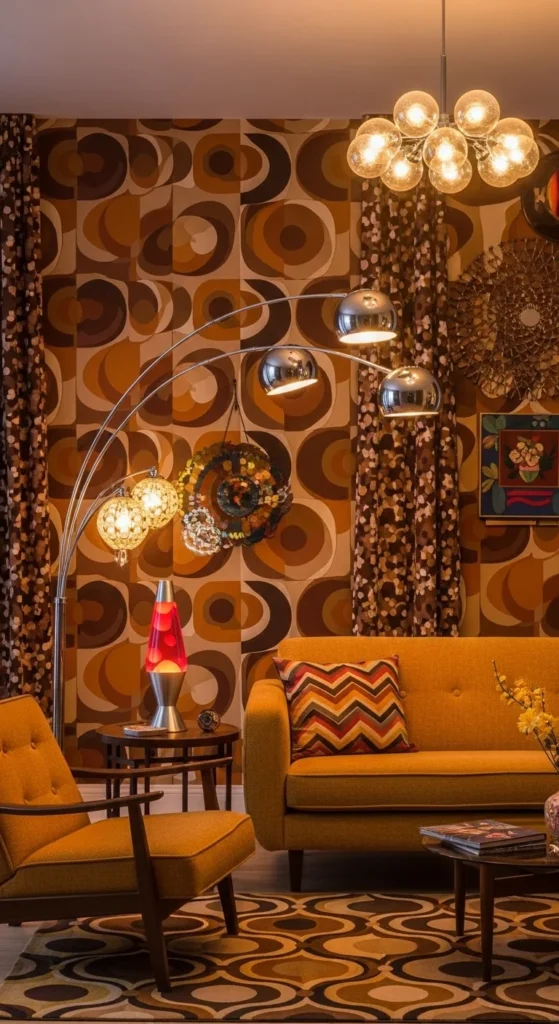
Lighting in the 1970s was both bold and functional, with statement pieces like lava lamps and globe pendants taking center stage.
Arc floor lamps and metallic fixtures added drama while providing ambient or task lighting in living areas.
Proper placement highlights furniture, walls, and decor while creating a welcoming atmosphere with nostalgic appeal.
Combining retro lighting with energy-efficient bulbs allows homeowners to enjoy vintage charm without sacrificing modern functionality.
Retro fixtures instantly convey a 70s interior design retro look, complementing bold colors, textured fabrics, and patterned decor throughout a room.
6. Wooden Paneling and Accents
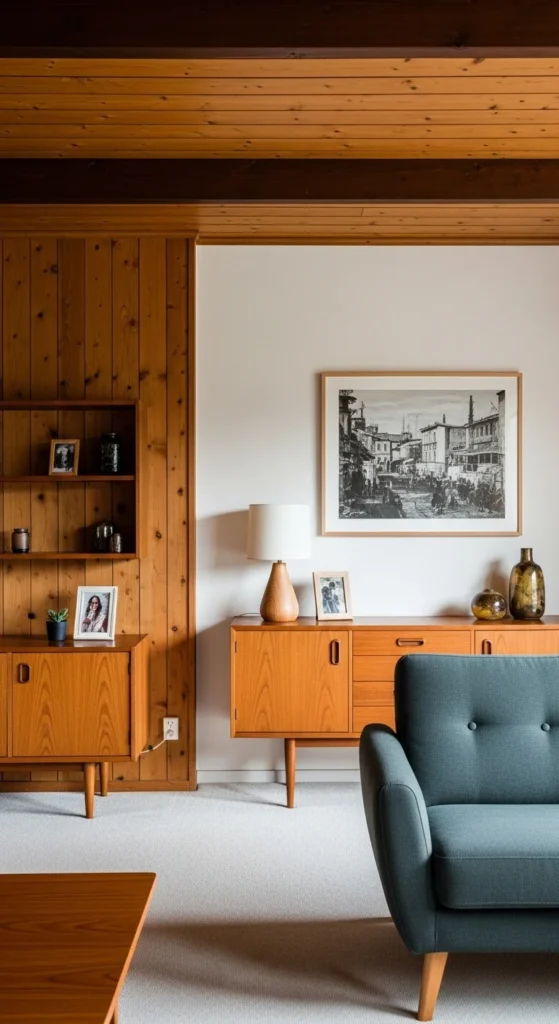
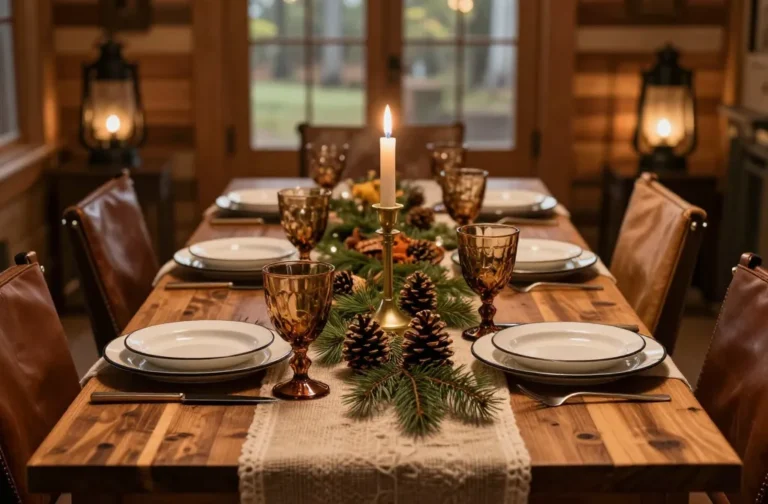
Wood paneling was a signature feature in 1970s interiors, adding warmth, texture, and a natural feel to living spaces.
Walls, ceilings, and furniture often featured warm-toned wood, creating depth and an inviting retro atmosphere.
Incorporating wooden accents in shelving, sideboards, or picture frames can subtly evoke a 70s interior design retro look.
Combining wood with neutral walls or modern furniture balances nostalgia with contemporary functionality and aesthetic appeal.
Strategic use of wooden elements ensures the space feels cozy, authentic, and harmonious without appearing outdated or heavy.
7. Bold Art Prints and Posters
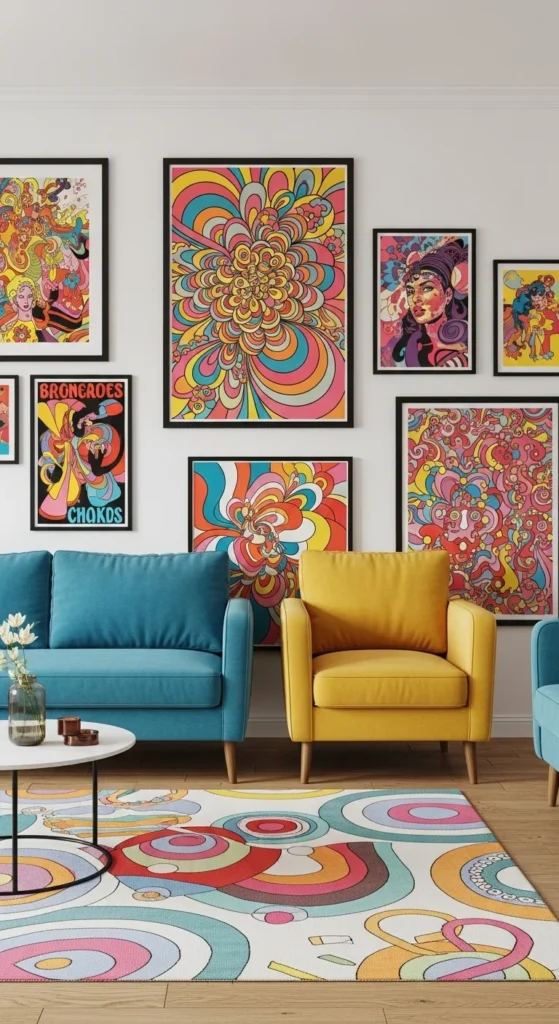
Pop art, psychedelic designs, and abstract prints were prominent in 70s decor, creating dynamic focal points in rooms.
Large, colorful artworks instantly capture attention and define a space’s personality, blending artistic flair with retro style.
Selecting complementary furniture, rugs, and colors ensures the art feels integrated rather than overpowering or mismatched.
Mixing framed vintage posters with modern artwork allows for a curated look while celebrating a 70s interior design retro look.
Proper placement on walls, mantels, or shelves enhances visual interest and encourages a cohesive, stylish, and lively ambiance.
8. Retro Furniture Shapes
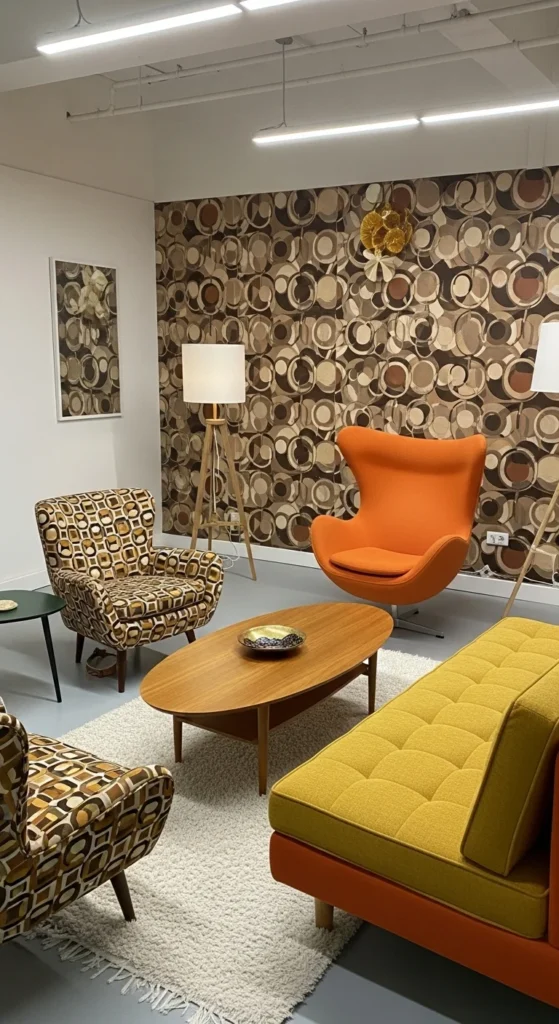
Distinctive 1970s furniture included low-profile coffee tables, curved sofas, and iconic egg chairs, offering playful, stylish forms.
These shapes break away from conventional lines and provide a unique visual rhythm in living or lounge spaces.
Upholstery in bold colors, geometric patterns, or velvet adds texture and enhances the furniture’s retro personality.
Pairing these pieces with modern items ensures rooms maintain balance while showcasing a 70s interior design retro look.
Thoughtful arrangement emphasizes comfort and aesthetic appeal, creating a functional space that remains timeless, nostalgic, and visually engaging.
9. Velvet and Plush Fabrics
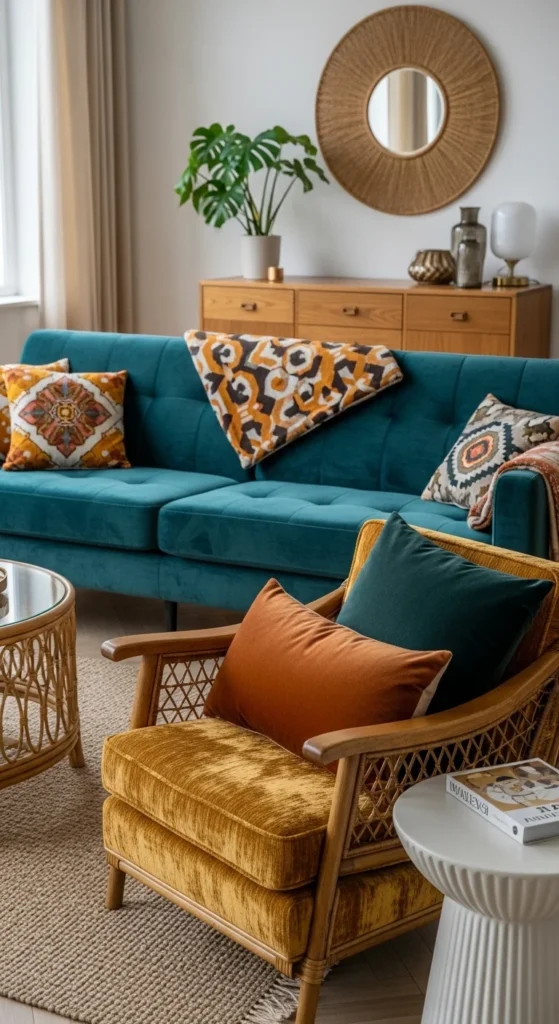
Velvet was a luxurious staple in 1970s interiors, covering sofas, chairs, cushions, and decorative pillows with rich texture.
The soft, tactile quality of plush fabrics adds warmth, comfort, and a hint of sophistication to any retro-inspired room.
Layering velvet with other materials like wood, leather, or rattan enhances depth and visual contrast in the space.
Choosing colors carefully ensures that bold tones complement surrounding decor while maintaining an authentic 70s interior design retro look.
Incorporating velvet strategically creates inviting, stylish areas that exude nostalgic charm without overwhelming modern interiors.
10. Rattan and Wicker elements
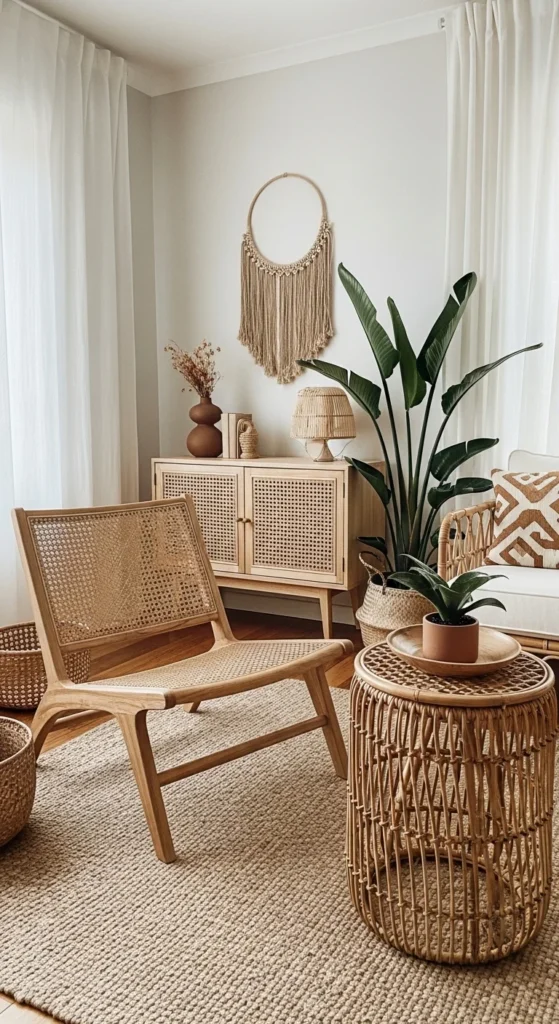
Rattan and wicker were widely used in 1970s interiors for chairs, baskets, and side tables, offering natural, breathable materials.
These textures bring an organic, relaxed vibe to living spaces, connecting indoor decor with earthy tones and greenery.
Incorporating rattan pieces can reinforce a 70s interior design retro look while staying functional and visually light.
Pairing these materials with indoor plants or layered textiles enhances warmth and adds dynamic interest throughout the room.
Strategic placement ensures that rattan complements other retro elements, creating harmony and balanced cohesion without cluttering the space.
11. Statement Mirrors and Metallic Accents
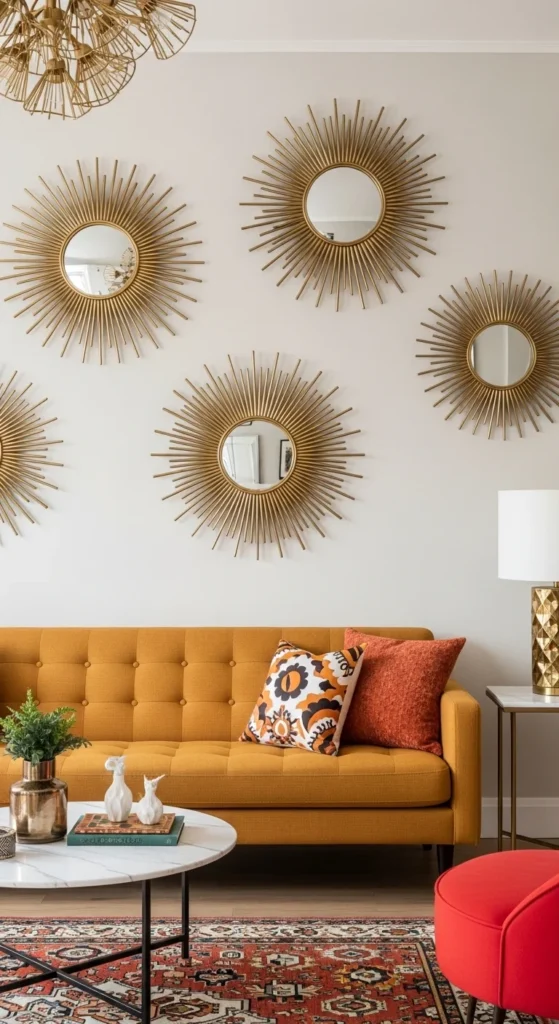
Statement mirrors, especially sunburst designs, became iconic in 1970s interiors, combining reflective surfaces with artistic flair.
Metallic accents, like brass or gold frames, added elegance and a subtle glamorous touch to walls, tables, and lighting fixtures.
These reflective surfaces enhance natural light, visually expand space, and emphasize retro-inspired focal points within the room.
Strategically placing mirrors above sofas, sideboards, or fireplaces can balance bold color palettes while highlighting key design elements.
Incorporating metallic accents alongside furniture, fabrics, and decor reinforces a 70s interior design retro look with a sophisticated yet playful feel.
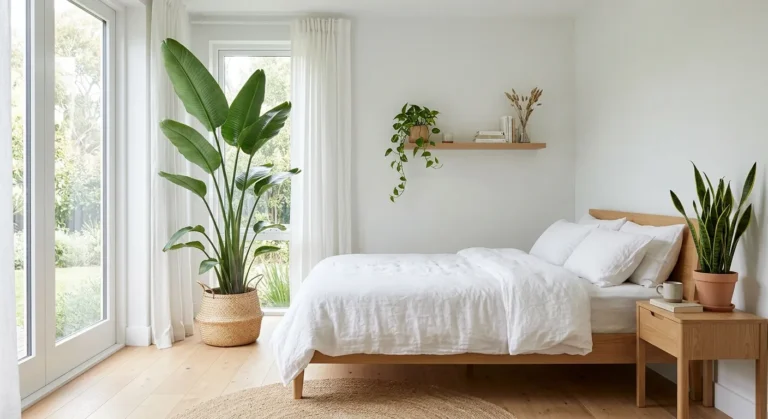
12. Indoor Plants and Greenery
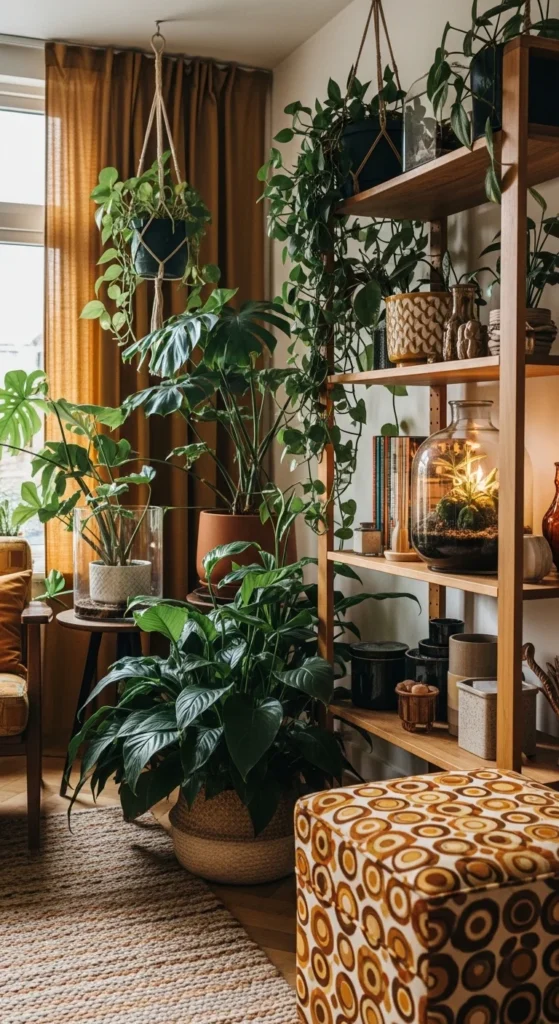
Lush greenery was central to 1970s interiors, bringing life, freshness, and natural textures into home spaces.
Hanging plants, large potted specimens, and terrariums provided visual variety and complemented the earthy, retro color palette.
Positioning plants near seating areas or shelving units adds vibrancy, organic charm, and a relaxing atmosphere throughout the room.
Combining greenery with patterned fabrics and textured rugs strengthens the nostalgic vibe of a 70s interior design retro look.
Indoor plants enhance aesthetics while improving air quality, making them functional and decorative components in any retro-inspired home.
13. Vintage Accessories and Decor Items
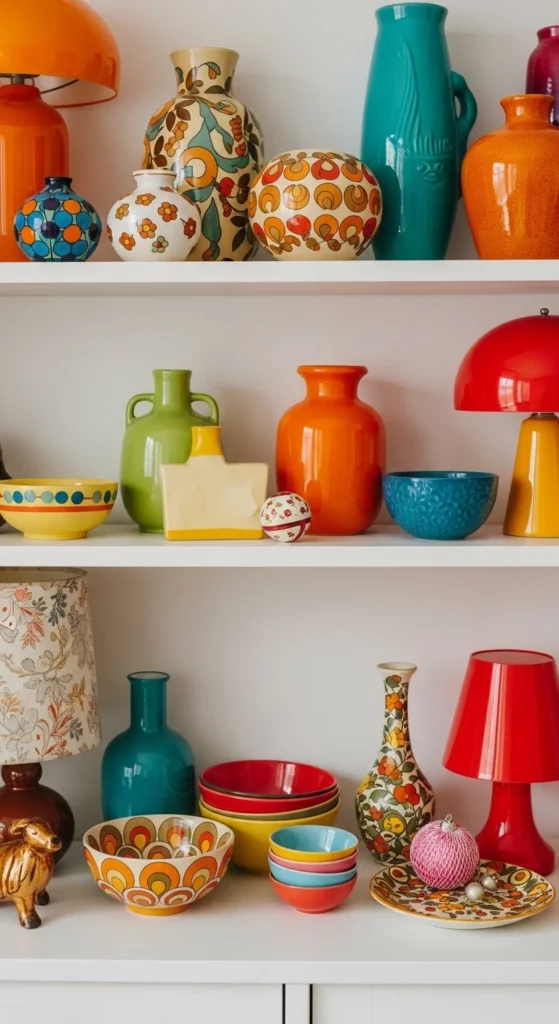
Ceramic vases, colorful bowls, and kitschy ornaments were signature accessories in 70s interior design.
These small decorative touches complete a retro aesthetic while providing opportunities to personalize each living space creatively.
Curating vintage items from thrift stores, antique shops, or modern reproductions ensures authenticity while remaining accessible.
Mixing accessories with functional elements like lamps or shelves creates visual balance and reinforces the 70s interior design retro look.
Rotating decorative pieces seasonally or by color can refresh the space while keeping it engaging, stylish, and authentically retro.
14. Patterned Curtains and Window Treatments
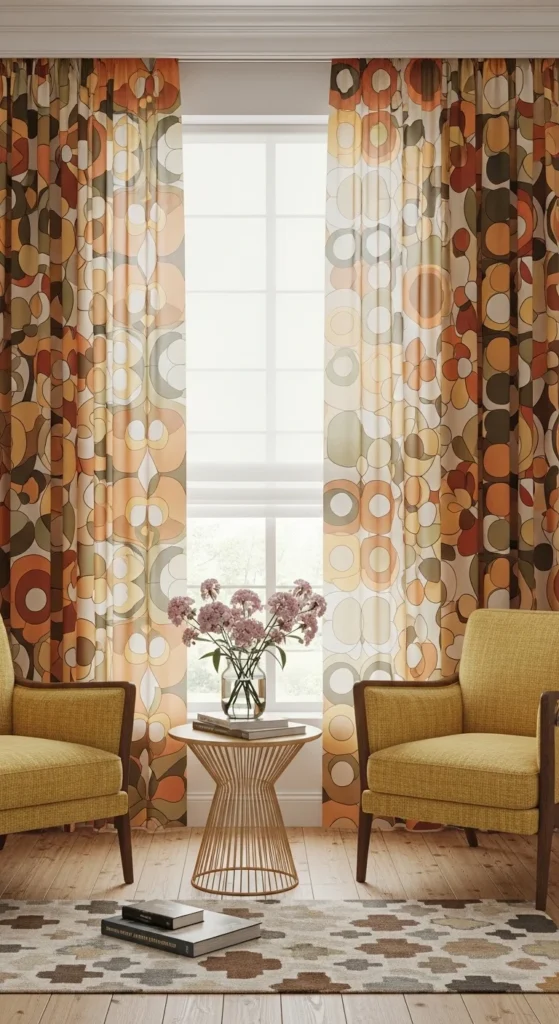
Bold floral or geometric patterns on curtains were a hallmark of 1970s interiors, offering visual interest and character.
Window treatments framed views, softened light, and became a central design feature complementing furniture and rugs.
Combining patterned curtains with neutral blinds or sheer layers prevents clutter while maintaining a cohesive retro aesthetic.
Coordinating curtain patterns with surrounding decor reinforces the authentic charm of a 70s interior design retro look.
Thoughtful layering ensures a harmonious balance between bold patterns and modern simplicity in contemporary retro spaces.
15. Open Shelving and Functional Spaces
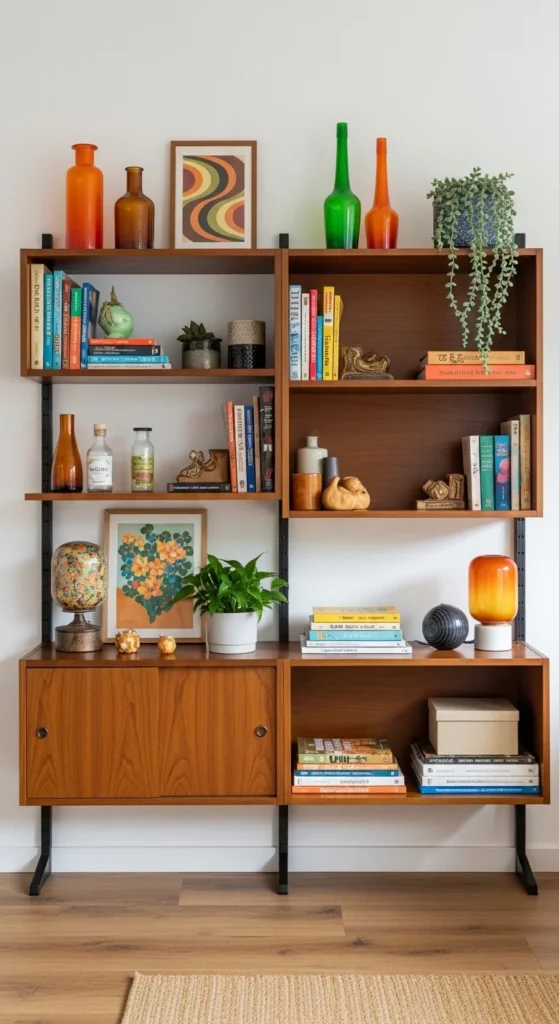
Open shelving, display units, and modular furniture encouraged creativity and visibility in 1970s homes.
These practical storage solutions allowed homeowners to showcase personal collections, decor items, and retro accessories.
Arranging objects with attention to color, texture, and scale ensures organization while highlighting a 70s interior design retro look.
Mixing books, plants, and decorative pieces creates a dynamic display that is both functional and visually engaging.
Open shelving enhances spatial flow, providing accessibility and style, and serves as a key feature of modern-retro interior integration.
Common Mistakes to Avoid in Retro Styling
Overusing bold patterns or colors can overwhelm a room, diminishing the charm of a 70s retro aesthetic.
Clashing furniture styles or mismatched textures often create a disjointed, chaotic appearance instead of cohesive nostalgia.
Balancing retro elements with neutral tones, clean lines, and minimal clutter ensures the space feels curated and visually comfortable.
Avoiding excessive decor items preserves both functionality and style, highlighting the most impactful features of the room.
Careful attention to placement, proportion, and color harmony maintains an authentic 70s interior design retro look without sacrificing modern livability.
Creative Ways to Update Retro Style for Today
Modernizing retro interiors requires subtle integration of contemporary elements without losing nostalgic charm.
Mixing statement furniture with updated fabrics, lighting, or finishes creates a functional space that respects 70s design.
Introducing modular furniture or multi-purpose decor balances retro aesthetics with today’s lifestyle needs, such as storage and flexibility.
Rotating colors seasonally or swapping accessories allows continual freshness while preserving a 70s interior design retro look.
By combining vintage inspiration with practical updates, homeowners can enjoy timeless retro spaces that feel lively, personal, and functional.
Final Wrap-Up
Incorporating a 70s interior design retro look allows modern homes to embrace nostalgia, warmth, and playful character throughout every room.
From bold colors and geometric patterns to textured fabrics and statement furniture, retro design offers endless creative opportunities.
Layering plants, lighting, and carefully curated accessories ensures a harmonious balance between vintage charm and contemporary style.
experimenting with colors, textures, and layouts lets homeowners personalize their space while preserving authenticity and visual interest.
Ultimately, a retro-inspired home celebrates individuality, artistic expression, and the enduring appeal of 1970s interior design aesthetics.