11 DIY herb garden ideas for small apartments

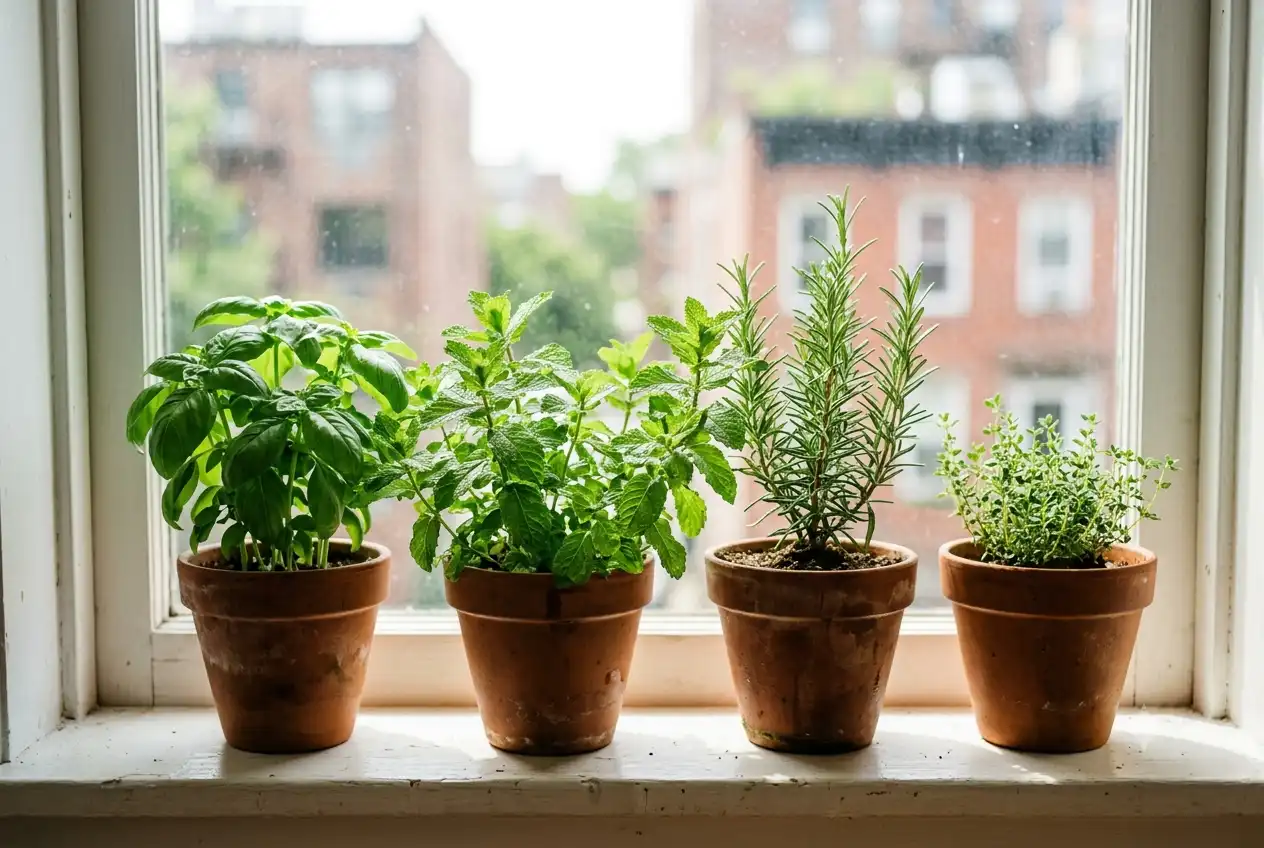
Small apartments rarely have room for a sprawling garden. But herbs don’t need much space to thrive. A windowsill, a corner shelf, or a stretch of wall can hold everything a home cook needs for fresh flavor year round.
Growing your own herbs also cuts down on grocery trips and food waste, since you snip only what you need. This article gathers eleven creative ways to fit an herb garden into tight quarters.
Each idea works with limited square footage while keeping plants healthy and within easy reach of the kitchen.
1. Wall Mounted Rail Herb Garden
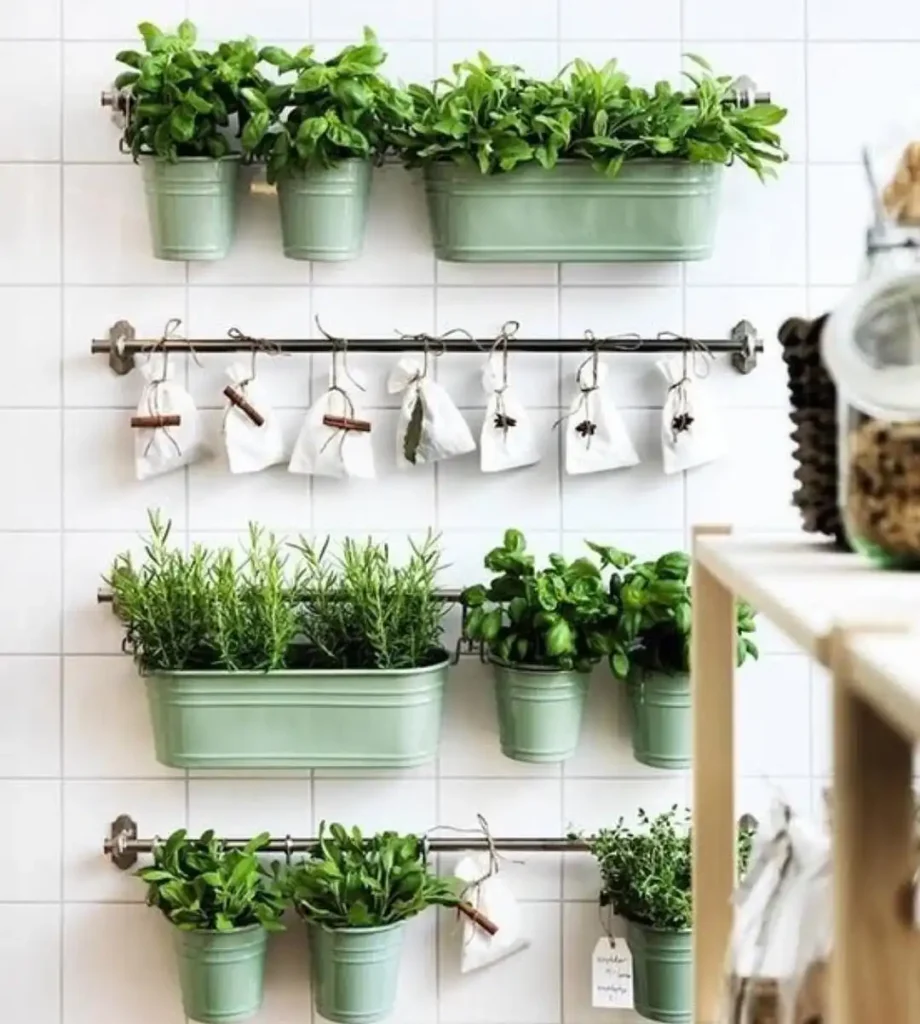
Sage green buckets and pots line a set of horizontal metal rails fixed to white tiled wall. Rows of leafy herbs fill the containers, while small linen sachets tied with twine hang between them, adding texture and a rustic touch.
Bars sit at staggered heights, creating a tiered display that climbs the wall without eating up counter or floor space. This setup makes the most of vertical real estate in a compact kitchen.
Owners can swap pots in and out or slide them along the rail to rearrange the layout as plants grow. A wooden shelf and glass jars sit nearby, tying the display into the rest of the kitchen storage.
2. Chain Hung Ammo Box Planters
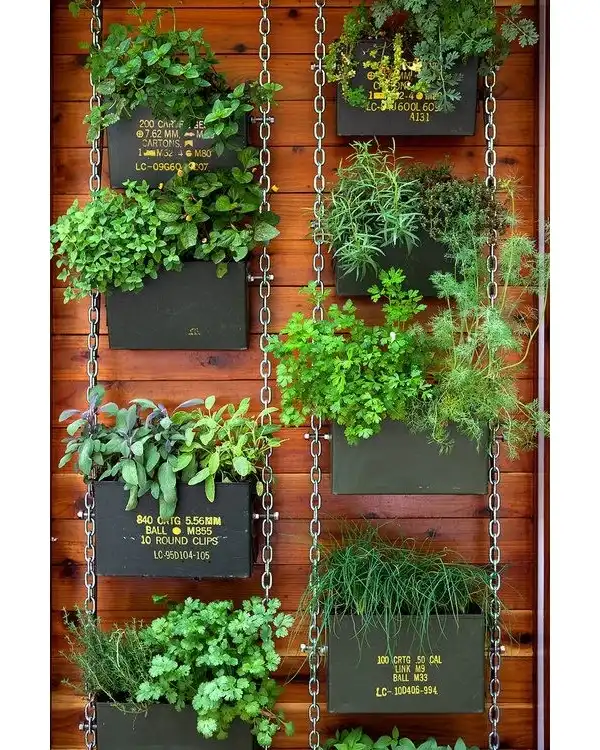
Repurposed metal ammunition boxes stamped with faded military text hang in two vertical columns against a stained wood plank wall. Sturdy chains suspend each box at a slightly staggered height, and herbs spill over the edges in dense green clusters.
Rosemary, parsley, chives, and sage fill the containers, each box holding a different variety. This design turns salvaged metal into a working garden with real character.
Chains let the boxes swing slightly, and the rustic stamped lettering stays visible beneath the foliage. Growers with access to old crates or boxes can copy this look using any sturdy metal container and a length of chain.
3. Black Slat Wall Planter Grid
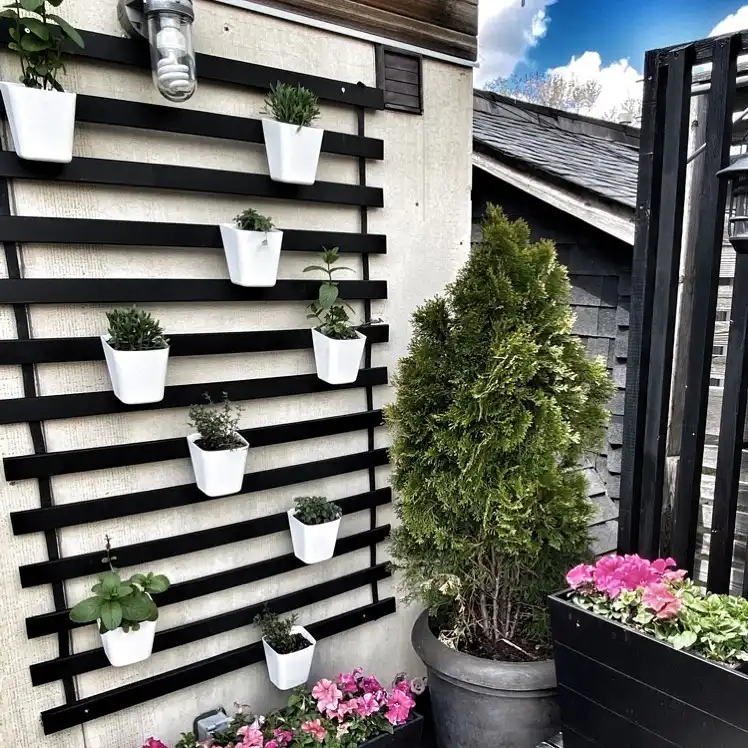
Small white pots clip onto a black wooden slat panel mounted at an angle on an exterior wall. Each pot holds a compact herb plant, and the staggered arrangement forms a zigzag pattern across the horizontal slats.
Nearby, a potted evergreen shrub and a planter of pink flowers round out the outdoor corner. Clips let owners slide pots along the slats or remove them entirely, so the layout stays flexible as plants mature.
This system suits balconies or narrow side walls where floor space runs short. A wall sconce mounted above the panel signals this is a well used outdoor nook, not just a display piece.
4. Whitewashed Pallet Shelf Planter
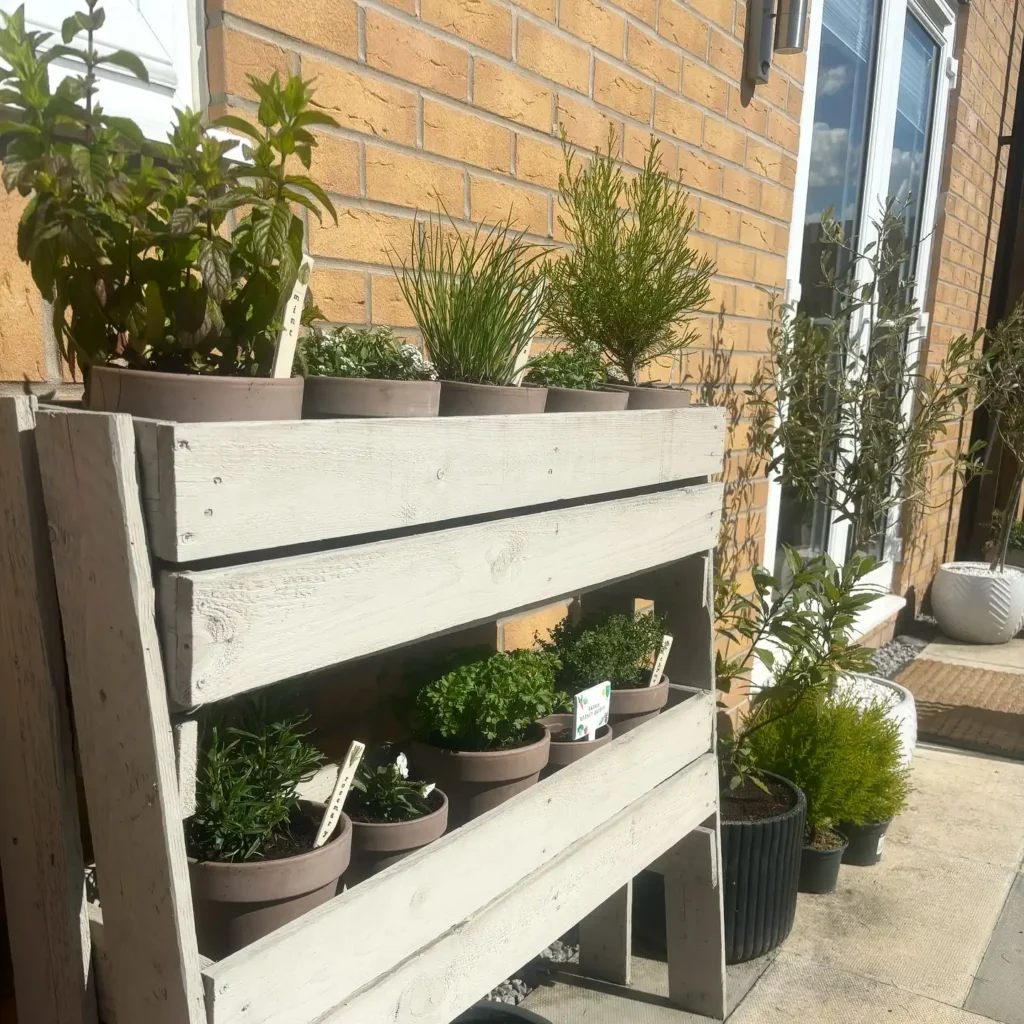
A repurposed wooden pallet, painted white, stands upright against a brick wall and holds two rows of terracotta pots. Wooden plant markers labeled mint and rosemary poke out of the soil, identifying each herb.
Mint, chives, rosemary, and parsley fill the top shelf, while parsley and other small plants sit on the lower level. Builders can make this stand from a single reclaimed pallet, cutting labor and material costs.
Slanted shelves let each pot catch sunlight without blocking the row behind it. Standing on a paved patio, the piece works well for renters who need a movable planting station rather than a fixed garden bed.
5. Bamboo Ladder Hanging Pots
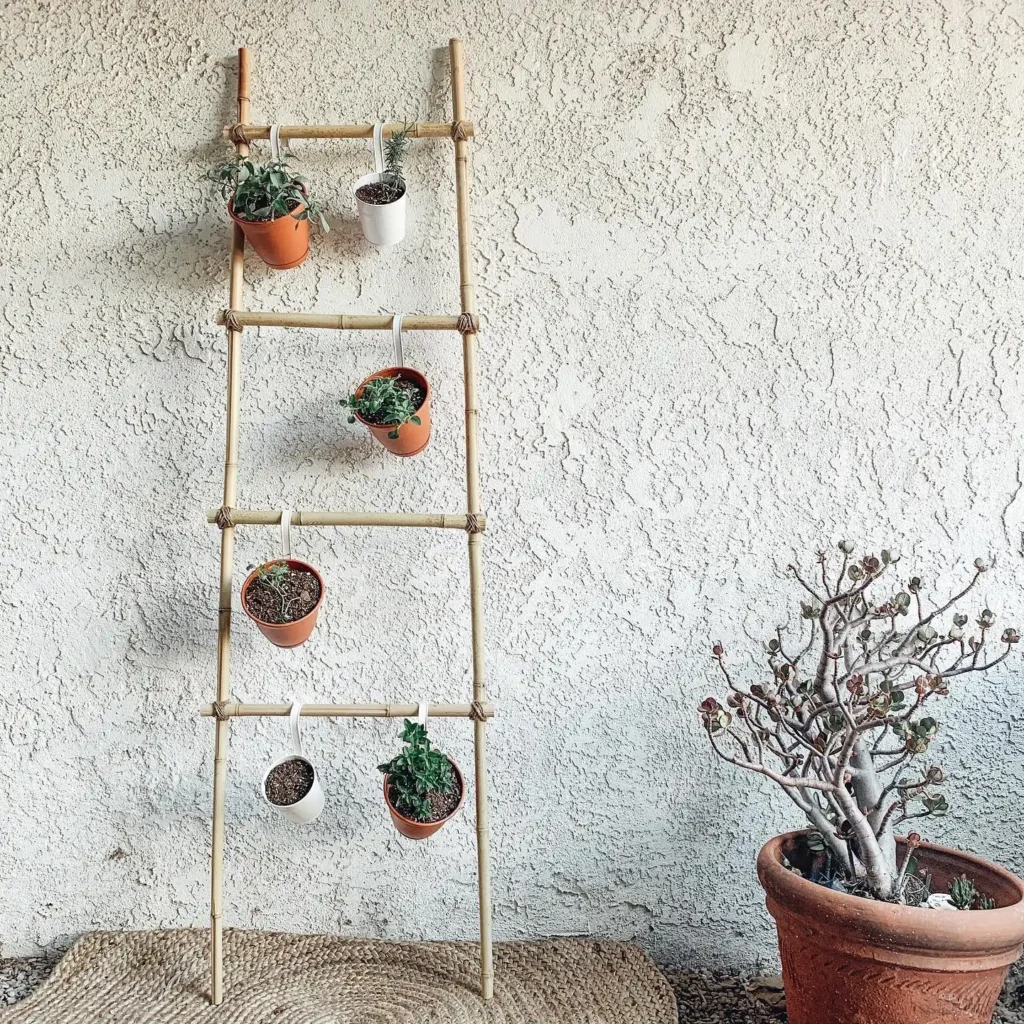
A bamboo ladder leans against a textured stucco wall, its rungs holding small pots suspended from fabric loops. Terracotta and white containers alternate down the frame, each one cradling a young herb or succulent.
Woven twine binds the bamboo joints together, giving the whole structure a handmade, natural look. Growers with narrow patios can lean this ladder in any unused corner without drilling into walls.
Rope loops let pots swing free of the rungs, so air moves around each plant and roots stay cool. A large potted jade tree stands beside the ladder, anchoring the display on a woven jute mat.
6. Stone Spiral Herb Bed
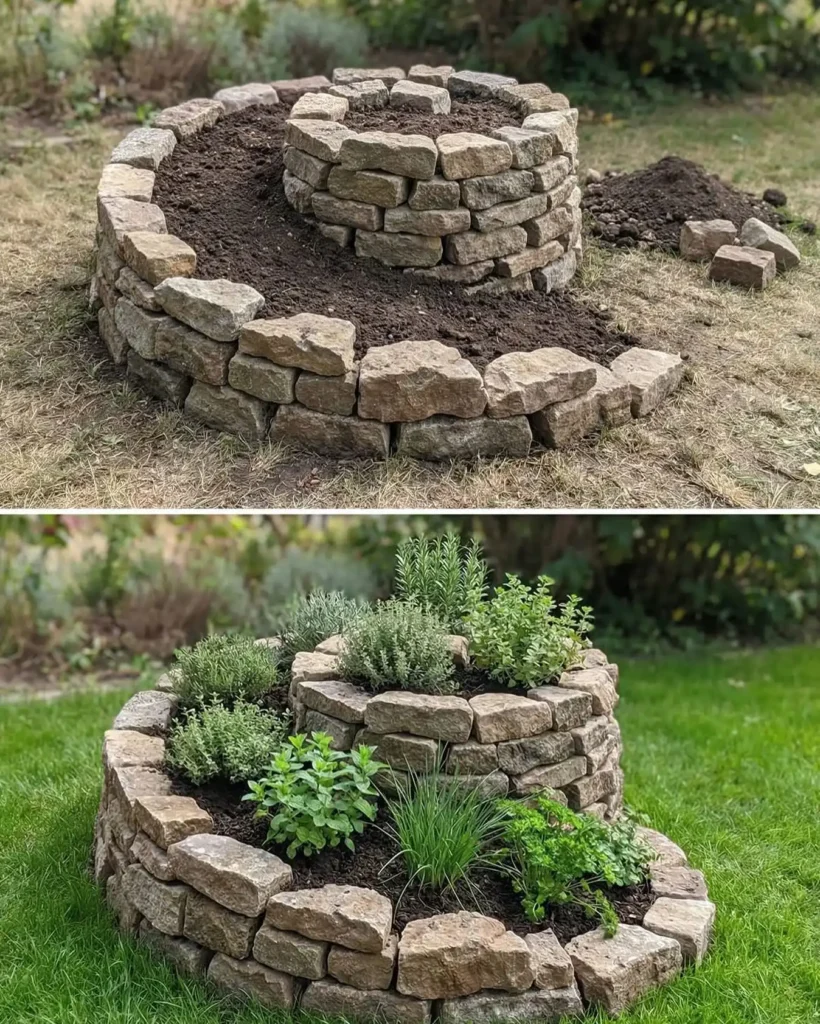
A raised spiral structure built from stacked stone blocks rises in tiers above a grassy lawn. The first photo shows the bed freshly built, filled with dark soil and no plants yet.
Below it, the second photo captures the same structure months later, with rosemary, thyme, mint, chives, and parsley filling every tier.Builders stack rocks in a curving spiral, raising the center higher than the outer ring.
This shape gives each herb a different sun exposure and drainage level within one compact footprint. Gardeners with a small yard patch can use this method to grow several varieties without dedicating separate beds to each one.
7. Three Tier Hanging Basket Planter
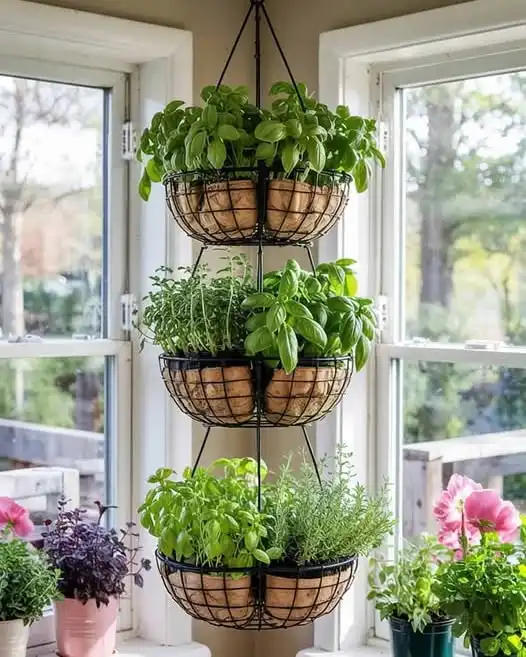
Three wire baskets lined with coconut coir hang in a stacked column between two corner windows. Basil, thyme, rosemary, and other leafy herbs fill each tier, spilling over the woven edges.
Natural light pours in from both sides, and potted flowers sit on the floor beneath the display. A single hook suspends the entire structure, so no wall mounting or drilling is required.
Coir liners hold moisture while still draining excess water, keeping roots healthy in each basket. This setup suits a bright corner near two windows, where herbs get sun from multiple angles throughout the day.
8. Recycled Plastic Bottle Planters
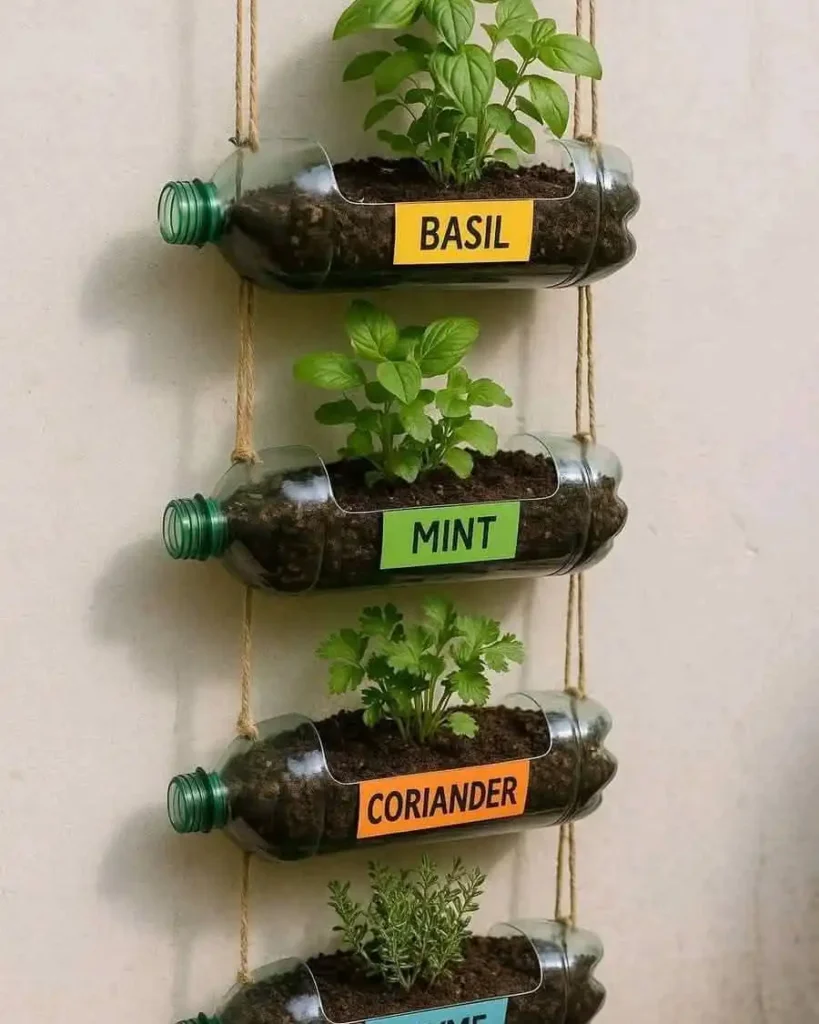
Clear plastic bottles, cut open on their sides, hang in a vertical row from twine against a plain wall. Bright colored labels mark each one: basil, mint, coriander, and a fourth partly visible herb below.
Green sprouts push up through dark soil inside every bottle, with the original screw caps still attached at each end.
This project reuses waste that would otherwise go in the trash, turning it into a functional garden.
Cutting a window along one side of each bottle creates a trough deep enough to hold soil and roots. Labels make it easy to identify each herb at a glance, a useful touch for beginners still learning to tell seedlings apart.
9. Galvanized Bucket Ladder Stand
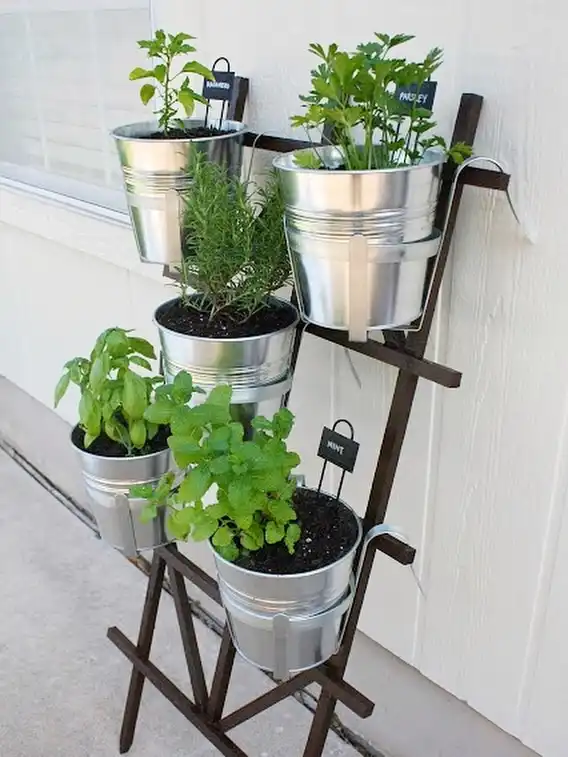
A dark wooden ladder frame leans against a white paneled wall, holding five shiny metal buckets at staggered heights. Small chalkboard tags label the herbs as rosemary, parsley, and mint, while basil and another leafy variety fill the remaining pots.
Curved metal hooks clip each bucket to the frame, keeping them steady on the angled rungs. Anchor points on this stand let owners rearrange buckets as plants outgrow their spots or need more sun.
The dark wood finish contrasts sharply against the shiny galvanized metal, giving the piece a clean, modern look. Standing freely on a patio, this ladder needs no wall mounting and can move wherever light is best.
10. Sage Green Pallet Pot Wall
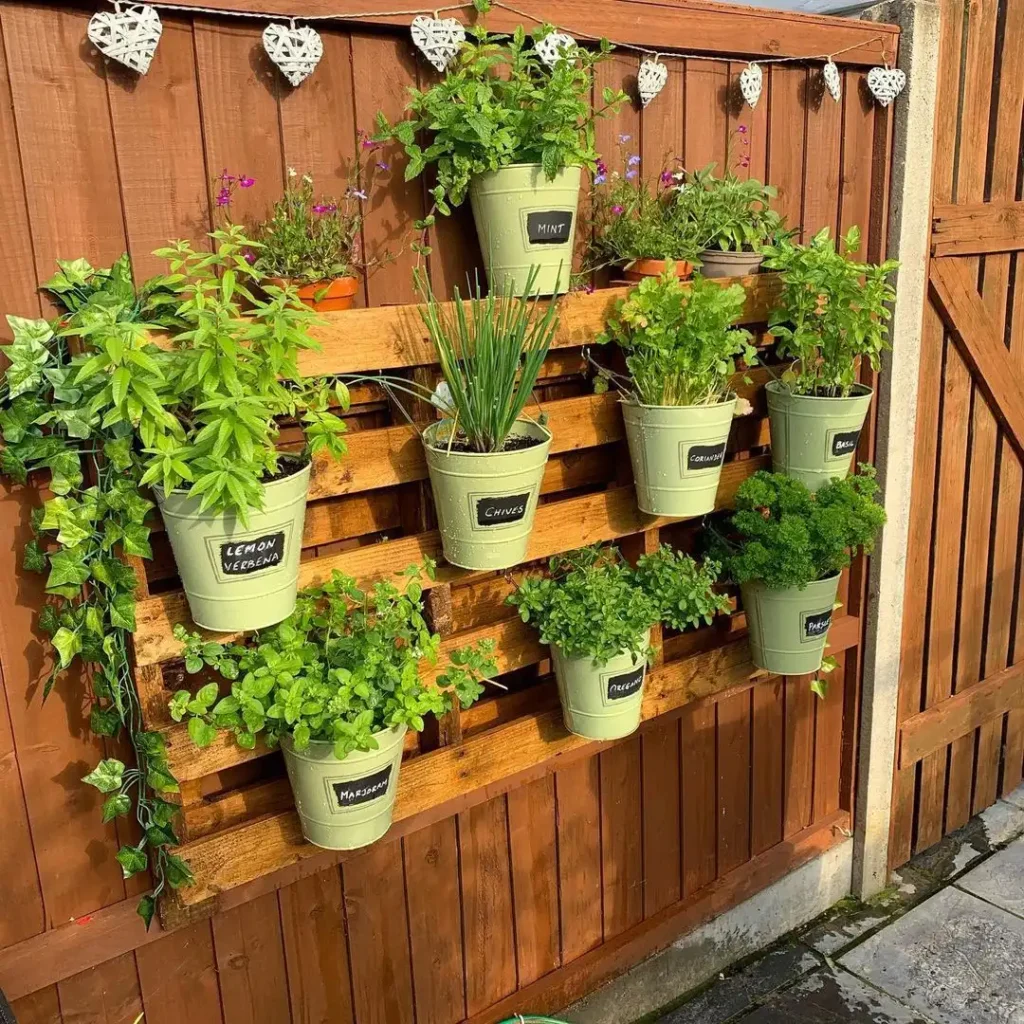
A wooden pallet mounted on a fence holds nine sage green pots, each tagged with a black label reading its herb name.
Mint, lemon verbena, chives, coriander, basil, oregano, marjoram, and parsley grow across the two rows, spilling greenery over the slats.
Woven heart shaped decorations string along the top edge, adding a personal touch above the pots.
Fence mounting frees up ground space entirely, turning an unused vertical surface into a full working garden.
Labels stop confusion between similar looking herbs, a handy detail for anyone still memorizing leaf shapes.
Trailing ivy hangs from one side of the pallet, softening the wooden frame and connecting the display to nearby flowering pots.
11. Terracotta Pot Tiered Display
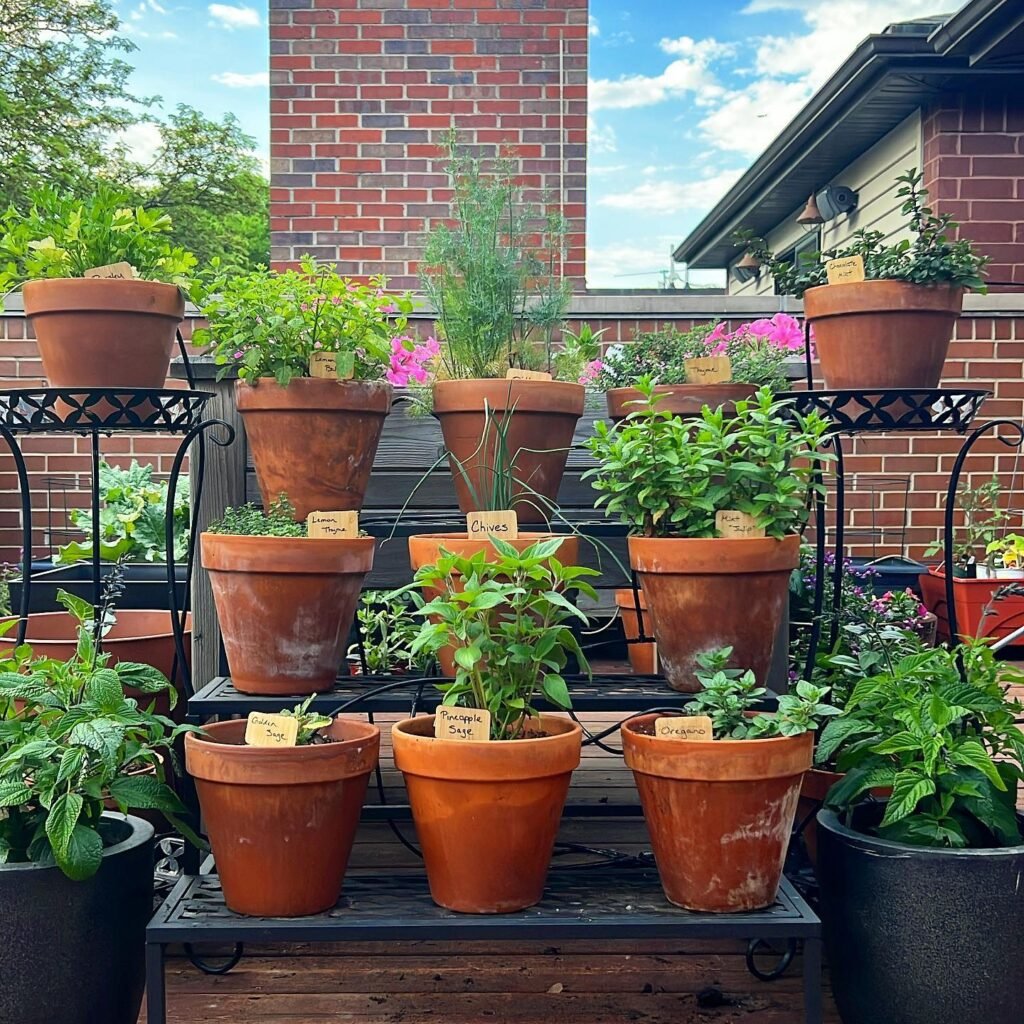
Rows of weathered terracotta pots climb a black metal tiered stand on a wooden deck, backed by a brick chimney and rooftop.
Wooden stick labels name each variety: lemon balm, chives, lemon thyme, mint julep, golden sage, pineapple sage, and oregano, among others.
Pink flowering plants and tomato seedlings sit nearby, filling out the wider deck garden.Tiered metal stands raise pots to different heights, letting sunlight reach every plant without one row shading another.
Terracotta walls stay porous, drawing moisture out and helping roots avoid rot in wet spells. Gathered together, the pots turn a small deck corner into a dense working collection of culinary herbs.