How to Layer a Bed Like a Hotel: The 7-Piece Formula


Walking into a hotel room often feels like stepping into a different kind of comfort.
The bed sits in the center of the room, plump and inviting, almost begging you to collapse into it.
That feeling does not happen by accident, and it is not reserved for five-star properties either.
Learning how to layer a bed the right way brings that same sense of comfort into any bedroom.
This guide breaks the process into a simple seven-piece formula that hotels rely on every single day.
Along the way, you will pick up bed styling tricks, luxury layering tips, and small design choices that matter.
By the end, making your bed will feel less like a chore and more like a design project.
Anyone who has stayed in a well-designed hotel room knows that small details often create the biggest impression.
The bed usually receives the most attention, since it anchors the entire room and shapes how the space feels.
Once you break the process into clear steps, replicating that feeling at home becomes surprisingly manageable for most people.
Why Hotel Beds Feel So Different From Beds at Home
Most people assume hotel beds feel better because of expensive mattresses or unlimited housekeeping budgets.
The real answer usually has more to do with layering order than with the price of any single item.
Hotels build their beds in stages, adding weight and texture gradually instead of piling everything on at once.
Each layer serves a specific purpose, from moisture control near the body to warmth trapped near the top.
This staged approach creates a sense of depth that a single thick comforter simply cannot replicate on its own.
Texture plays a major role in that depth as well, since hotels rarely rely on one fabric type alone.
Smooth cotton sheets sit beneath heavier knit throws, and crisp linens contrast against plush decorative pillows nearby.
That contrast tricks the eye into seeing richness, even when the individual pieces are fairly simple and affordable.
Once you understand this layering logic, the seven-piece formula below will make a lot more practical sense.
It is not about spending more money, but about arranging familiar bedding pieces in a smarter, more intentional order.
Small hotels and large chains alike tend to follow this same layering logic, regardless of their overall price point.
Even budget-conscious properties manage to create an inviting bed simply by respecting the order in which layers get added.
That consistency proves this approach has less to do with luxury spending and more to do with thoughtful arrangement.
The Science of a Well-Layered Bed: Comfort, Temperature, and Texture
Good bed layering does more than look attractive, since it also helps regulate your body temperature through the night.
Lightweight, breathable fabrics near the skin allow heat to escape when the room feels warm or humid.
Heavier layers stacked above trap warmth close to the body once the temperature in the room begins to drop.
This flexibility explains why hotel beds rarely feel too hot or too cold, regardless of the season outside.
Guests can simply push away or pull up a layer depending on how their own body feels that night.
Texture contributes to comfort in a way that many people overlook when shopping for new bedding.
A single fabric type, no matter how soft, can start to feel flat and one-dimensional after a while.
Mixing a crisp cotton sheet with a nubby waffle throw creates gentle friction that feels more interesting to the touch.
Layering also affects sound and weight, since heavier blankets create a grounded, secure feeling for many sleepers.
Understanding these small details makes each step in the seven-piece formula easier to apply with real confidence.
Weight distribution matters too, since a heavier top layer combined with a lighter base creates a balanced, secure feeling overall.
Sleepers often report better rest when their bedding feels evenly distributed rather than lopsided or bunched in certain areas.
Keeping these small physical details in mind will help each layer earn its place rather than existing purely for decoration.
The 7-Piece Formula for Layering a Bed
1. The Fitted Sheet: The Foundation of How to Layer a Bed Correctly
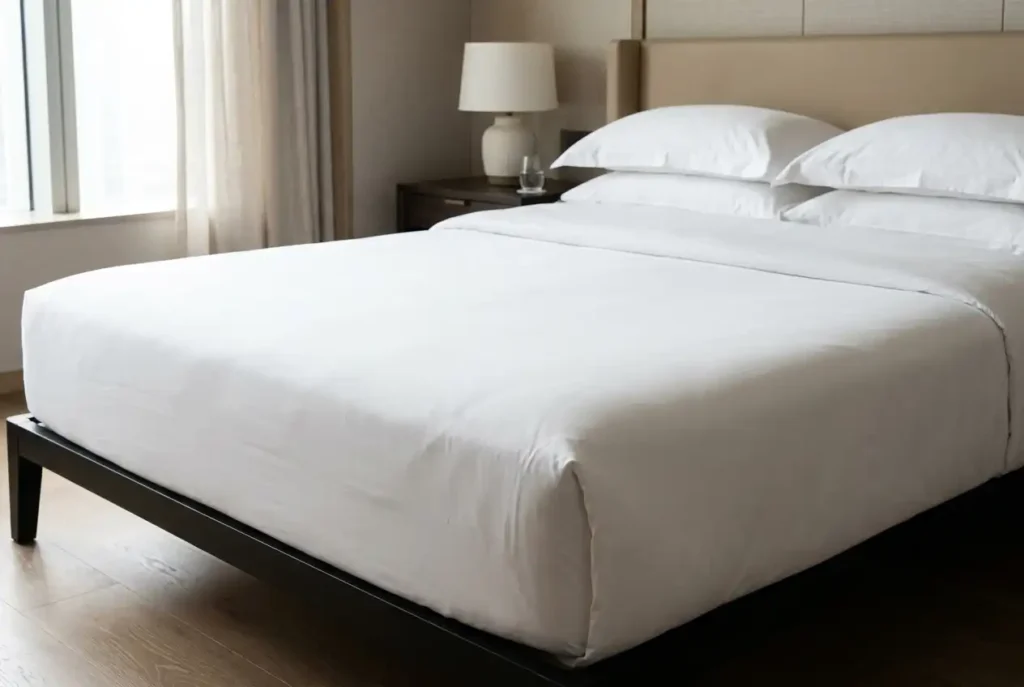
Every strong bed layering routine starts with a fitted sheet that hugs the mattress tightly on all sides.
A loose or wrinkled fitted sheet undermines every layer added afterward, no matter how expensive those layers might be.
Hotels favor sheets with a smooth, tightly woven finish that stays snug even after guests toss and turn overnight.
Choosing a sheet with the correct pocket depth for your mattress prevents slipping and keeps corners neatly tucked in place.
Cotton percale offers a crisp, cool feel, while sateen weaves bring a subtle sheen and softer hand.
This first layer sets the tone for the entire bed, so it deserves careful attention rather than an afterthought.
Getting this foundation right makes every following step in the process noticeably easier to execute well.
2. The Flat Sheet: Creating the Crisp Hotel-Style Base
A flat sheet adds a breathable barrier between your body and the heavier bedding layered on top later.
Hotels typically use this sheet to create their signature clean, tucked appearance at the head and sides of the bed.
The classic hotel fold involves pulling the flat sheet a few inches over the top edge of the blanket.
This small technique reveals a crisp white band that instantly signals a polished, well-made bed to anyone walking in.
Hospital corners keep the flat sheet secure at the foot of the bed, preventing it from bunching overnight.
Choosing a flat sheet that matches or complements your fitted sheet keeps the overall look cohesive and intentional.
This layer might seem minor, but it plays a major role in achieving that instantly recognizable hotel finish.
Guests rarely notice a flat sheet when it is done well, yet they always notice when it is missing.
3. The Duvet or Comforter: Adding Volume and Softness
The duvet or comforter acts as the visual centerpiece of the bed, giving it shape, height, and softness.
Hotels typically choose a duvet insert with generous loft, creating that inviting, cloud-like appearance guests notice immediately.
A thin, deflated comforter can make even the most expensive sheets look unfinished and slightly disappointing.
Down alternative inserts offer a similar puffiness to natural down while remaining a practical choice for most households.
Selecting the right warmth level depends on your climate, your room temperature, and your personal sleeping preferences.
This layer should feel substantial without becoming overwhelming, striking a balance between coziness and everyday practicality.
Getting the volume right here does more to elevate the bed’s overall look than almost any other single piece.
Fluffing the duvet each morning takes only a moment and helps it maintain that generous, rounded shape throughout the day.
4. The Duvet Cover: Where Color and Pattern Take the Lead
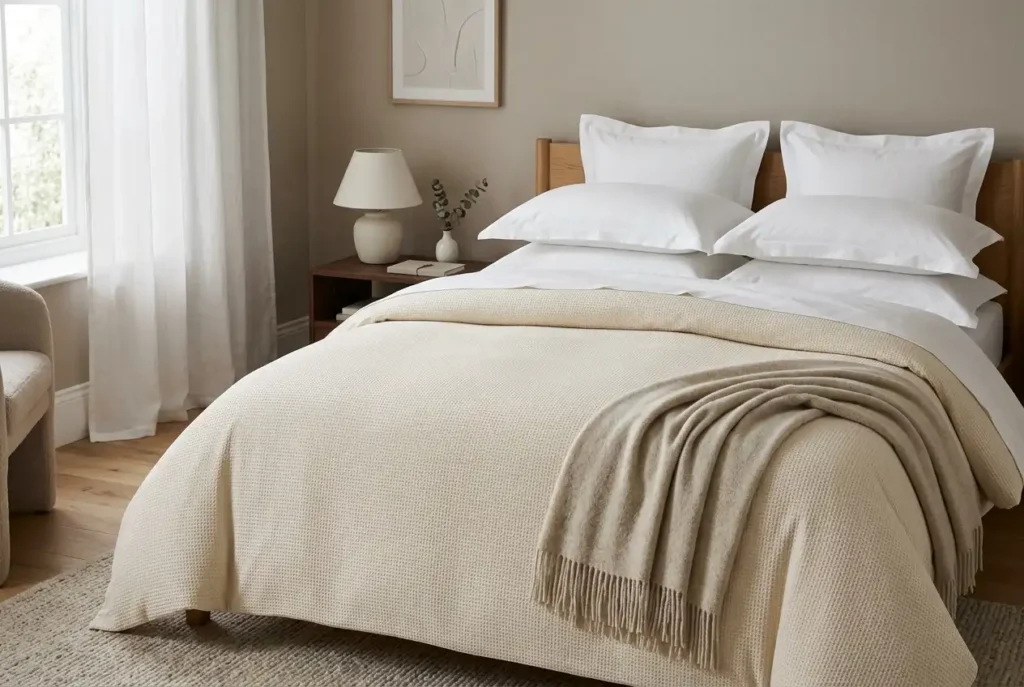
The duvet cover determines the overall color story and personality of the entire bed at a glance.
Hotels often choose solid white or cream covers because they read as clean, timeless, and effortlessly sophisticated.
At home, you have more freedom to experiment with muted tones, subtle patterns, or gentle texture variations.
Sticking to a calm, neutral palette tends to recreate that relaxing, spa-like atmosphere associated with upscale hotel rooms.
A duvet cover with a slight texture, like matelasse or waffle weave, adds interest without introducing loud pattern.
This piece essentially functions as the largest fabric surface in the room, so its color choice carries real weight.
Selecting it thoughtfully ties every other layer together into one cohesive, intentional design statement.
Testing fabric swatches against your existing wall color often prevents costly mismatches once the full cover arrives.
5. The Decorative Coverlet or Throw Blanket: Adding Depth
A folded coverlet or throw blanket placed near the foot of the bed introduces welcome texture and visual depth.
This layer breaks up a large expanse of solid color, keeping the bed from looking flat or unfinished.
Hotels frequently use this piece to reinforce their brand identity through a signature color or subtle pattern choice.
Choosing a fabric weight that contrasts with the duvet cover creates a satisfying sense of dimension across the bed.
A chunky knit throw pairs nicely with a smooth duvet cover, while a quilted coverlet suits a more casual bedroom.
This layer also offers a practical bonus, giving guests a lighter option on warmer nights without stripping the bed entirely.
Even a simple folded blanket can noticeably elevate the finished look of an otherwise plain bed.
Rotating this piece seasonally offers an easy way to refresh the bed without replacing any of the larger layers.
6. The Pillow Layering Strategy: Sleeping Pillows Meet Decorative Pillows
Pillow arrangement might be the single fastest way to transform an ordinary bed into a hotel-style showpiece.
The standard formula starts with two or four sleeping pillows placed flat against the headboard for support.
Euro shams stack behind those sleeping pillows, adding height and a clean, structured backdrop to the arrangement.
Smaller decorative pillows sit in front, introducing color, pattern, or texture without overwhelming the overall composition.
This size progression, from largest at the back to smallest in front, creates natural visual balance across the bed.
Limiting the total pillow count prevents the arrangement from feeling cluttered or difficult to manage each night.
A well-executed pillow layer draws the eye immediately and often becomes the most photographed part of the entire room.
Fluffing and repositioning pillows each morning keeps this arrangement looking fresh and intentional rather than tired or flattened.
7. The Bed Runner or Scarf: The Finishing Designer Touch
A bed runner or scarf placed across the foot of the bed completes the layered look with one final gesture.
This narrow strip of fabric often echoes a color, pattern, or texture found elsewhere in the bedroom.
Hotels use this piece to tie the bedding into the broader design of the room, from curtains to accent chairs.
Choosing a runner in a contrasting texture, like a woven throw or a structured fabric, adds a designer-level finish.
This layer also serves a practical purpose, protecting the duvet cover from shoes or luggage placed at the foot of the bed.
Though it goes on last, guests often notice this detail first when they walk into the room.
Adding this final touch signals that every other layer beneath it was chosen with real intention and care.
Even a modest, inexpensive runner can pull the whole arrangement together once every earlier layer is in place.
Common Mistakes That Ruin a Hotel-Style Layered Bed
Even with the right pieces on hand, a few common mistakes can undo the entire layered effect.
Overloading the bed with too many decorative pillows is one of the most frequent missteps people make.
A cluttered arrangement looks busy rather than luxurious, and it makes the bed harder to use each night.
Skipping the flat sheet fold is another mistake, since it removes that crisp, tucked detail hotels rely on heavily.
Mismatched textures can also work against you, especially when every layer uses the exact same smooth fabric finish.
Without contrast, the bed can start to look flat, even when the individual pieces are high quality.
Choosing a duvet cover in a bold, busy pattern often fights against the calm atmosphere most people want in a bedroom.
Finally, neglecting the foot of the bed leaves the layered look feeling incomplete and slightly unfinished overall.
Correcting these small issues usually takes only a few minutes but makes a noticeable difference in the final result.
Rushing through the process is often the root cause behind most of these common bed styling mistakes.
Slowing down and treating each layer as its own small task tends to produce a far more polished final look.
Reviewing the bed from across the room, rather than only up close, also helps catch anything that feels out of place.
Taking a quick photo on your phone can also reveal imbalances that are harder to spot in person.
Comparing that photo to a favorite hotel bed image often highlights exactly which layer still needs adjustment.
How to Adjust the Formula by Season and Bedroom Style
The seven-piece formula stays consistent year-round, but individual pieces can shift depending on the season outside.
During warmer months, swapping a heavy comforter for a lighter quilt keeps the bed cooler without losing its layered look.
Breathable materials like linen or lightweight cotton work especially well for flat sheets and duvet covers in summer.
When colder weather arrives, a wool or flannel throw adds warmth while still contributing texture to the arrangement.
Bedroom style also influences which fabrics and colors work best within this same seven-piece structure.
A coastal bedroom might lean toward soft blues, natural linen, and relaxed, slightly rumpled textures throughout the layers.
A modern minimalist space often favors solid neutrals, cleaner lines, and fewer decorative pillows overall.
Regardless of style or season, the underlying structure of how to layer a bed remains exactly the same.
Only the fabric choices and color palette need to change to suit your personal taste and the time of year.
Children’s rooms can follow this same formula too, simply by choosing playful colors and softer, more durable fabrics.
Guest rooms benefit from a slightly more neutral palette, since it appeals to a wider range of personal tastes.
Adapting the formula this way proves how flexible the underlying structure truly is across different rooms and purposes.
Even a shared family bedroom can follow this formula, with small tweaks that suit each person’s individual comfort needs.
Final Thoughts
Layering a bed like a hotel does not require a large budget or a complete bedding overhaul overnight.
It simply requires understanding the order and purpose behind each of the seven pieces covered in this guide.
Start with the foundation, focus on the fitted and flat sheets, and build upward from there with patience.
Add volume through the duvet, introduce depth with a coverlet, and finish with a thoughtful pillow arrangement.
The bed runner or scarf ties everything together, signaling that every layer beneath it was chosen with care.
Once you master this formula, making your bed each morning becomes a small daily design ritual rather than a task.
A well-layered bed can shift the entire feeling of a bedroom, turning it into a genuine retreat at home.
Take these seven steps one at a time, and let the process feel like a small act of care for yourself.
Over time, this routine will start to feel natural, and the results will speak for themselves every single morning.