17 Coastal Australian Garden Ideas for Dry, Sandy Yards

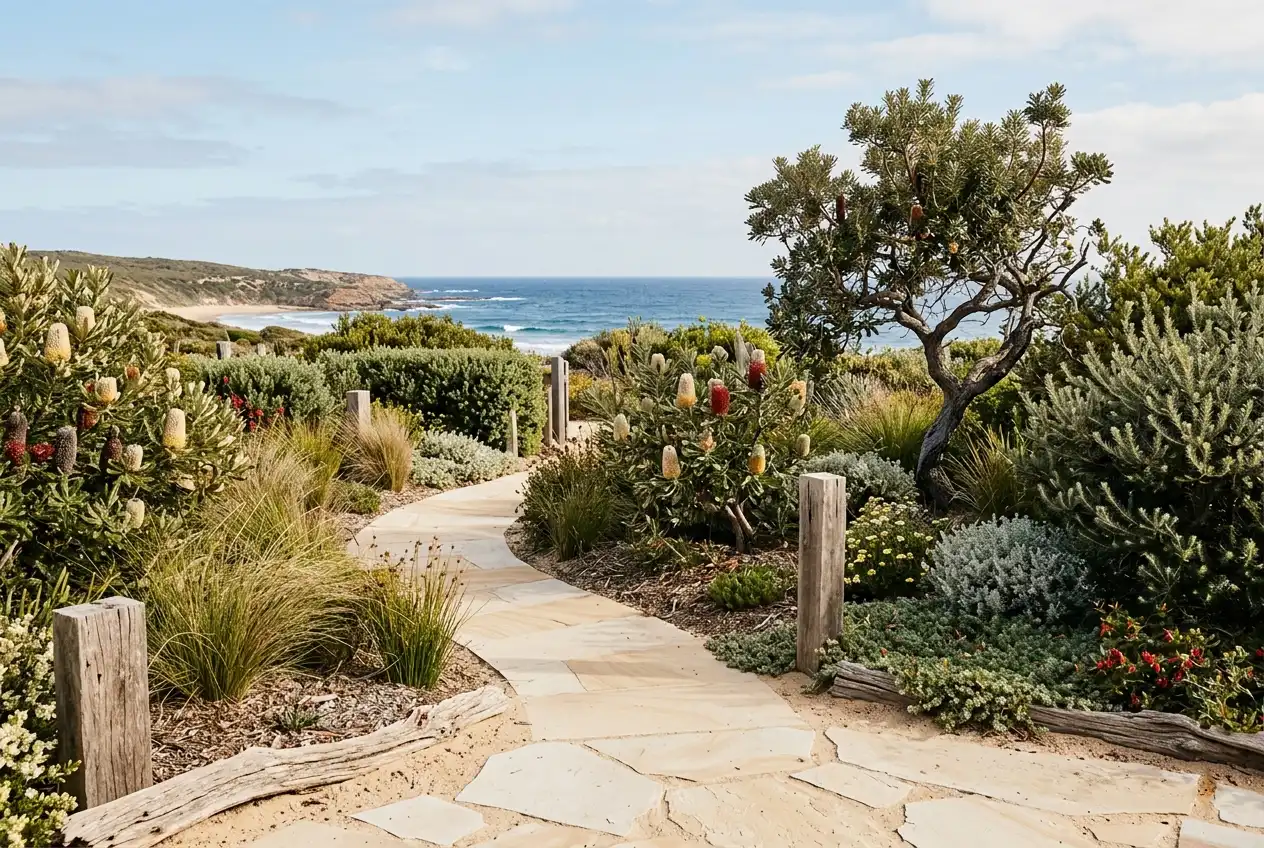
Coastal living in Australia comes with a unique gardening challenge. Salt spray, relentless sun, and sandy soil can turn a dream yard into a struggle. But these conditions don’t have to limit beauty.
With the right plants and design choices, a dry, sandy yard can become a thriving coastal retreat that feels right at home by the sea. Below, we explore real garden setups that embrace the coastal lifestyle rather than fight against it.
Each idea shown here works with nature, not against it, and proves that sandy soil can support lush, low maintenance outdoor spaces.
1. Layered Border Garden with Native Trees
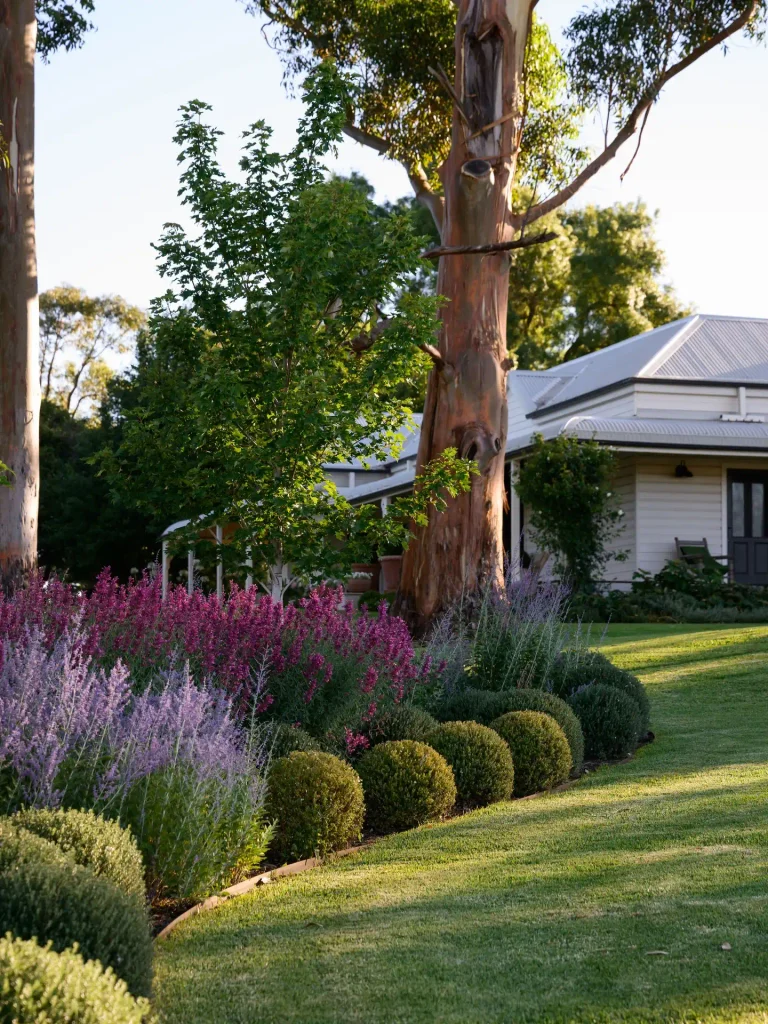
A sweeping garden bed curves along the edge of a manicured lawn. Rounded box hedges form a neat green border, while tall purple salvia and Russian sage spill upward behind them.
Two mature trees anchor the scene, their trunks framing a classic weatherboard homestead in the background. This layout shows how texture and height create depth in a coastal setting.
Clipped hedging holds structure through wind and salt exposure. Soft, airy blooms behind the hedge add movement and color without demanding rich soil. Together, they form a border that stays tidy yet feels relaxed.
2. Lush Layered Pathway Garden
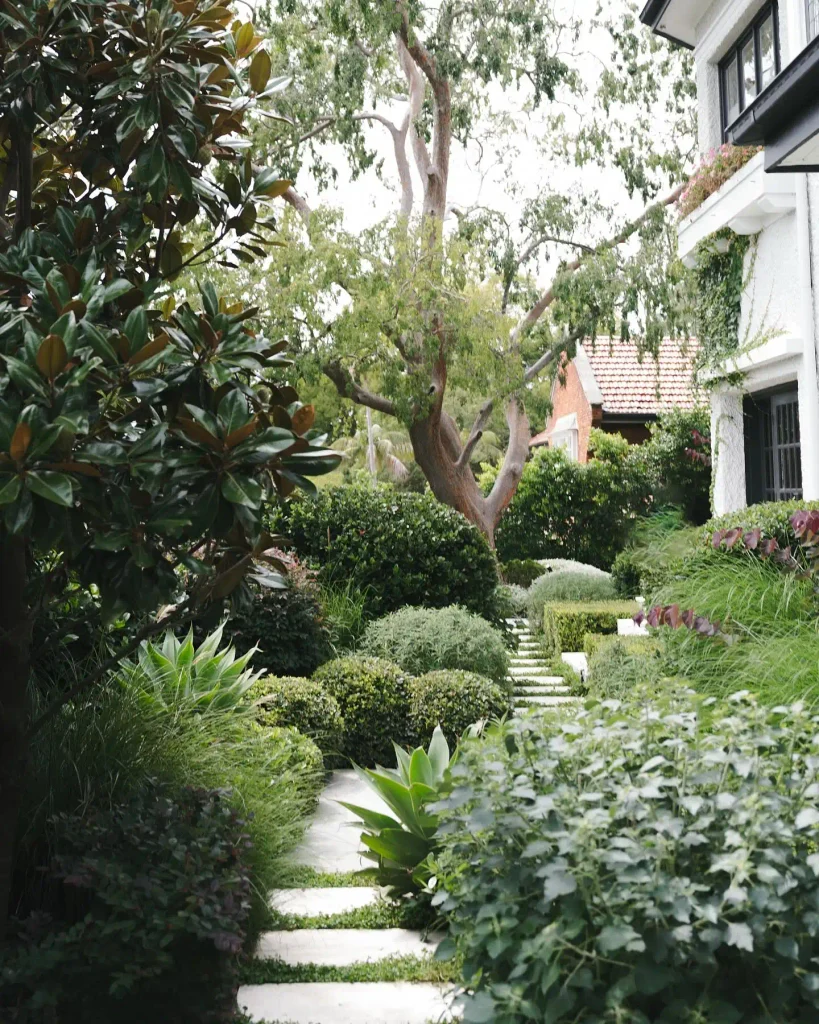
Large square pavers cut a straight line through dense, layered greenery. Rounded shrubs sit beside spiky agave and soft ornamental grasses, creating contrast in shape and leaf texture.
A gnarled, multi-trunked tree rises above the path, its bare branches stretching toward a white rendered house.
Here, planting density does the heavy lifting. Every gap between pavers holds a different plant form, from broad glossy leaves to fine wispy blades.
Stepping stones keep the space walkable without breaking up the greenery. This kind of layered planting suits sandy coastal blocks because it hides bare soil while still allowing airflow.
3. Drought Tolerant Succulent and Cactus Front Yard
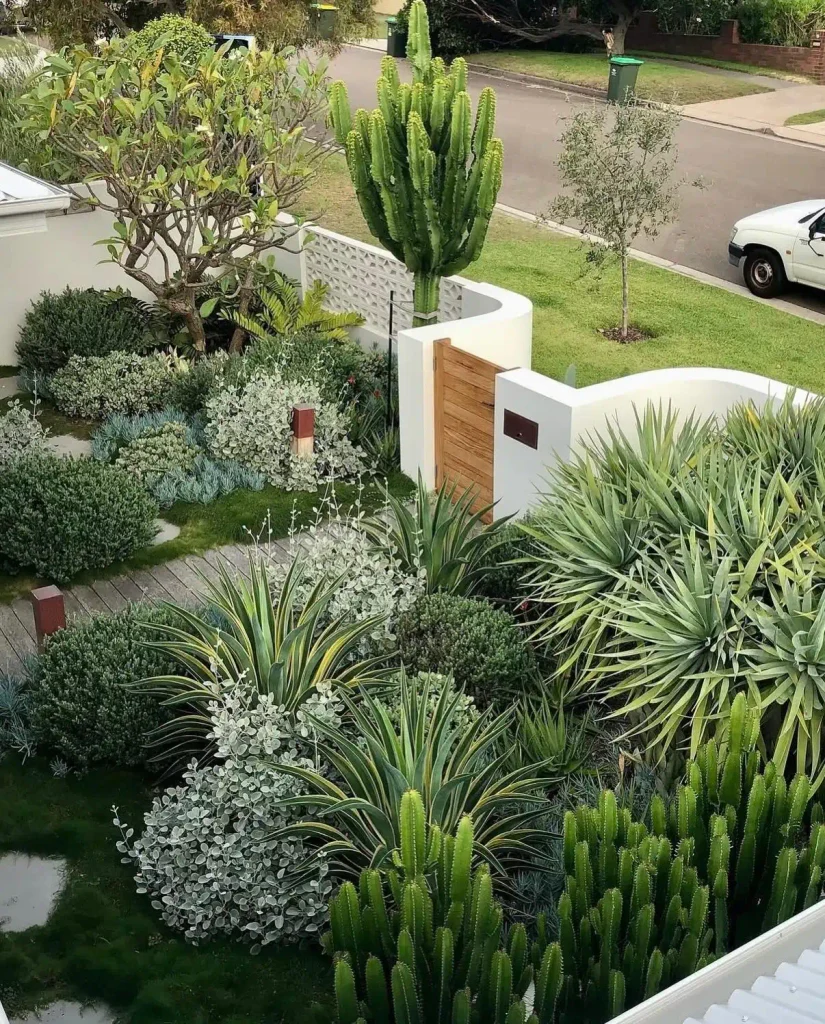
Tall candelabra cacti rise beside spiky agave and silvery grey succulents, all packed into a front yard bordered by a curved white wall. A timber gate breaks up the render, while frangipani and native shrubs fill the upper corner.
Grey groundcovers spill across the garden bed, softening the hard landscaping below. This yard proves that sandy, dry ground can support bold, sculptural planting.
Succulents and cacti store their own water, so they thrive where rainfall is scarce and drainage runs fast. Grey and silver foliage reflects harsh sun, cutting down on stress during summer heat. Structured hedging adds order among the wilder, spikier shapes.
4. Gravel Side Path with Silver Foliage Planting
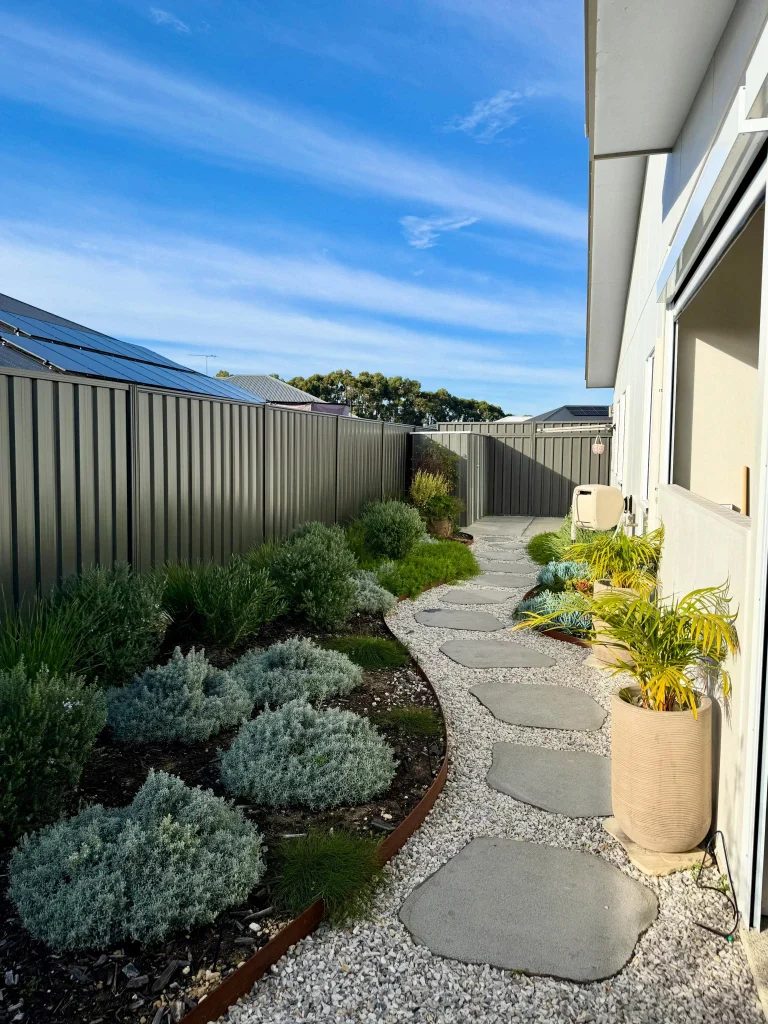
Large flat pavers float across a bed of white pebble gravel, running the length of a narrow side yard. Steel edging separates the path from garden beds packed with silvery grey shrubs, soft grasses, and rounded native plants.
A potted golden cane palm sits near the house, adding a pop of warm color against the colorbond fence. Gravel paths solve two problems at once on sandy blocks.
They allow water to drain straight through, and they need no mowing or edging along tight house lines.
Grey foliage plants along the border reflect heat and tolerate the poor soil found in narrow side gardens. Steel edging keeps the gravel contained and gives the whole path a crisp, finished line.
5. Raised White Retaining Wall with Trailing Succulents
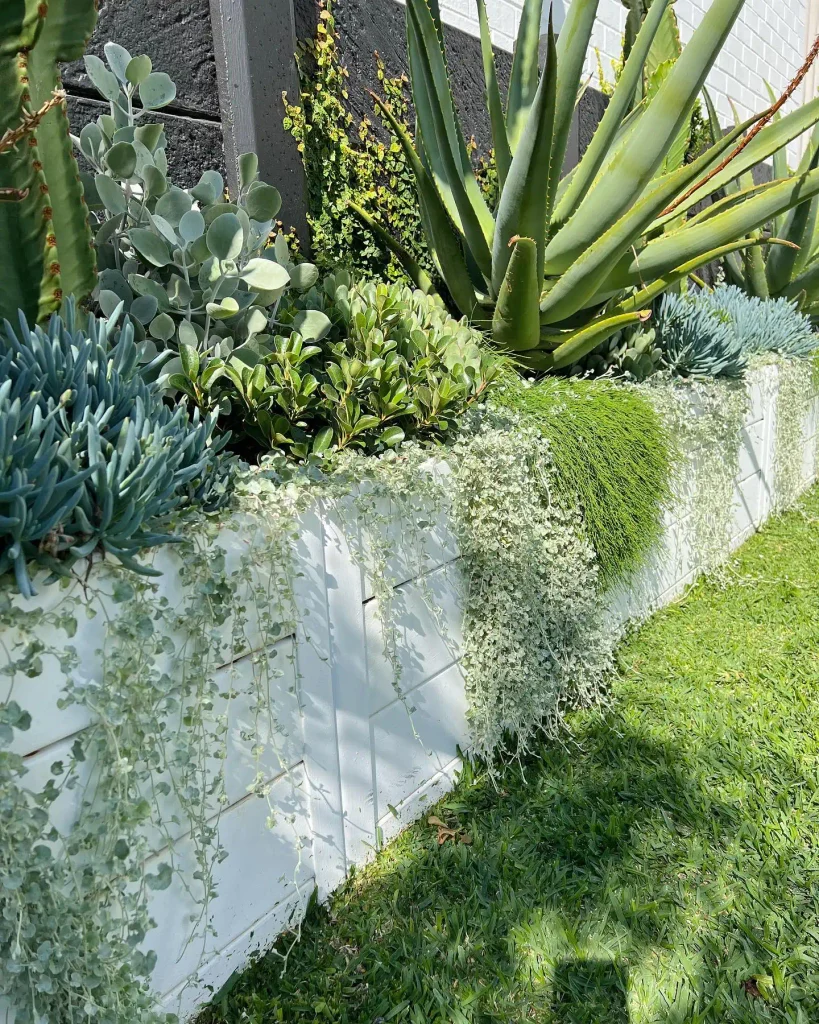
A crisp white brick retaining wall holds a raised garden bed above a strip of green lawn. Blue chalk sticks and silver dichondra spill over the edge, draping down the wall face.
Behind them, a bold aloe plant fans out its thick spiked leaves, backed by neat box hedging and a dark timber fence.
Raised beds like this give roots better drainage on sandy sites, since excess water moves away quickly. Trailing succulents soften the hard wall edge and thrive in the drier top layer of soil.
Aloe adds height and a sculptural focal point without needing regular watering. Together, the mix creates a tidy, low maintenance display that still feels full and textured.
6. Cottage Style Garden with Spiral Topiary
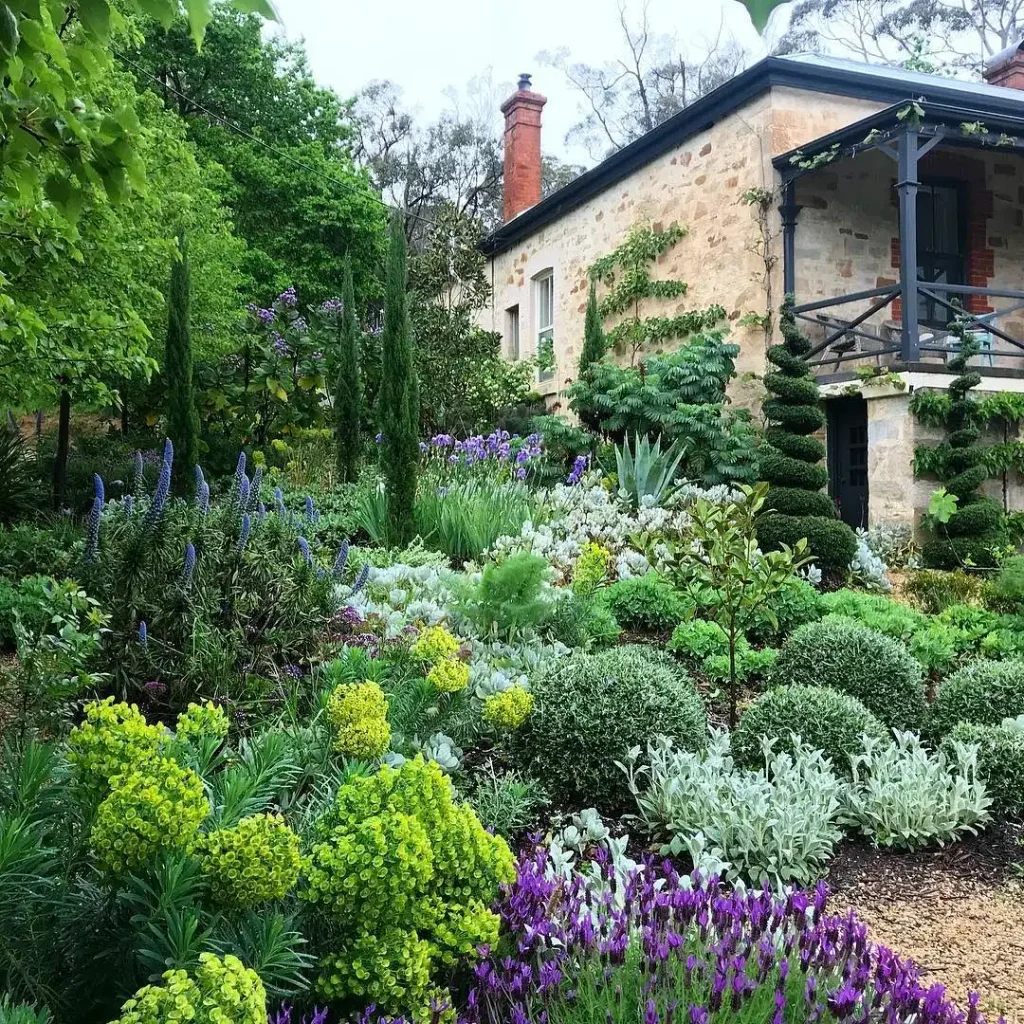
Bright chartreuse euphorbia and deep purple salvia fill the front of a densely planted cottage garden. Tall spikes of blue echium rise behind them, while silver lamb’s ear spreads low across the bed.
Spiral clipped topiary flanks a stone cottage with a red brick chimney, and slender cypress trees stand tall in the background.
This style shows how coastal gardens can still feel romantic and full despite tough conditions. Silver foliaged plants like lamb’s ear handle salt air and dry soil with ease.
Spiral topiary brings formal structure that anchors the looser, flowering plants around it. Layering color, height, and texture this way keeps the eye moving across the whole bed.
7. Modern Entryway Garden with Sculptural Agave
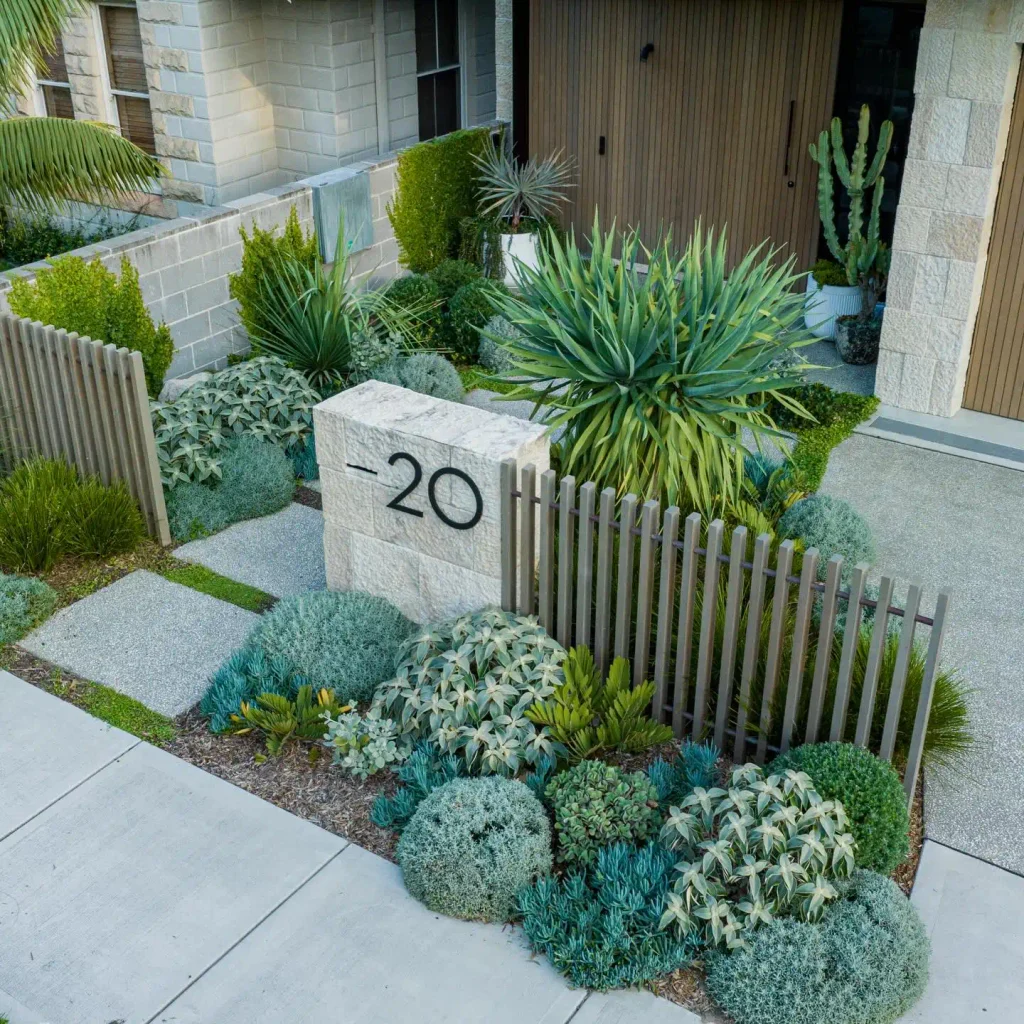
A striking agave takes center stage beside a stone letterbox marked with bold house numbers. Blue chalk sticks, variegated shrubs, and rounded grey foliage plants fill the bed below, edged by a slatted timber picket fence.
A tall cactus and potted yucca stand near the timber front door, tying the entry planting to the house style.
Entry gardens carry extra weight since they set the first impression. Agave and cacti handle full sun and reflected heat from paving without any fuss.
Mixing leaf shapes, from spiky blades to soft rounded mounds, keeps a compact bed looking rich rather than sparse. Grey and blue tones throughout also echo the coastal palette found further down the street.
8. Native Wildflower Bed with Rustic Steel Edging
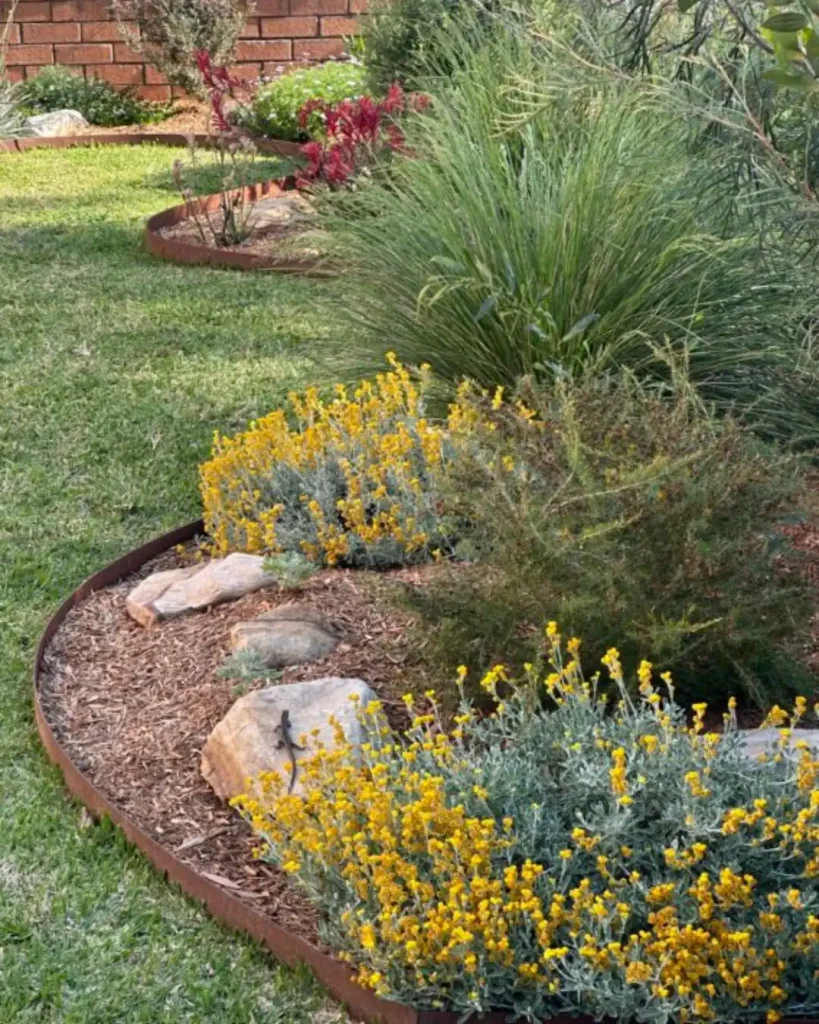
Golden yellow native daisies spill over sandstone rocks, framed by a rounded corten steel border. Tall native grasses sway behind them, next to a dense feathery shrub.
A small lizard suns itself on a rock, and a second garden bed with red kangaroo paw sits further back near a brick wall.
Curved steel edging gives these mulched beds a bold, defined shape against open lawn. Bark mulch locks moisture into sandy soil and keeps weeds from taking hold between plants.
Native daisies and grasses need little water once established, making them a smart choice for exposed coastal blocks. Scattered rocks also add habitat for local wildlife, like the lizard resting here.
9. Farmhouse Verandah Garden with Flowering Groundcover
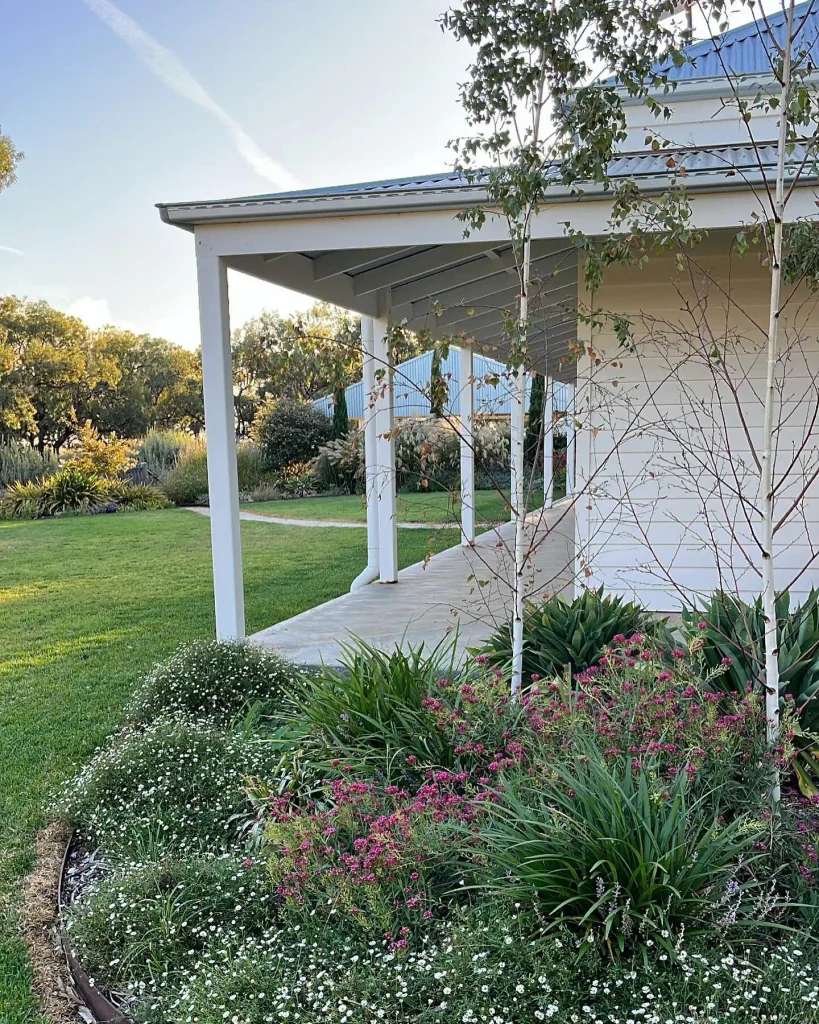
A wide covered verandah stretches along a cream weatherboard homestead, supported by simple white posts. Below the eaves, a curved bed bursts with tiny white daisies and clusters of magenta flowers, mixed among strappy green foliage.
Slender birch trunks rise through the planting, and open lawn rolls out toward a gravel path in the distance.
Verandah gardens need plants that won’t block the walkway or overwhelm the house. Low growing daisies and grasses stay compact while still filling the bed with color.
Curved edging softens the straight lines of the porch and steers the eye toward the open paddock beyond. This planting style suits rural coastal properties where wind exposure calls for hardy, ground hugging choices.
10. Vibrant Native Wildflower and Kangaroo Paw Border
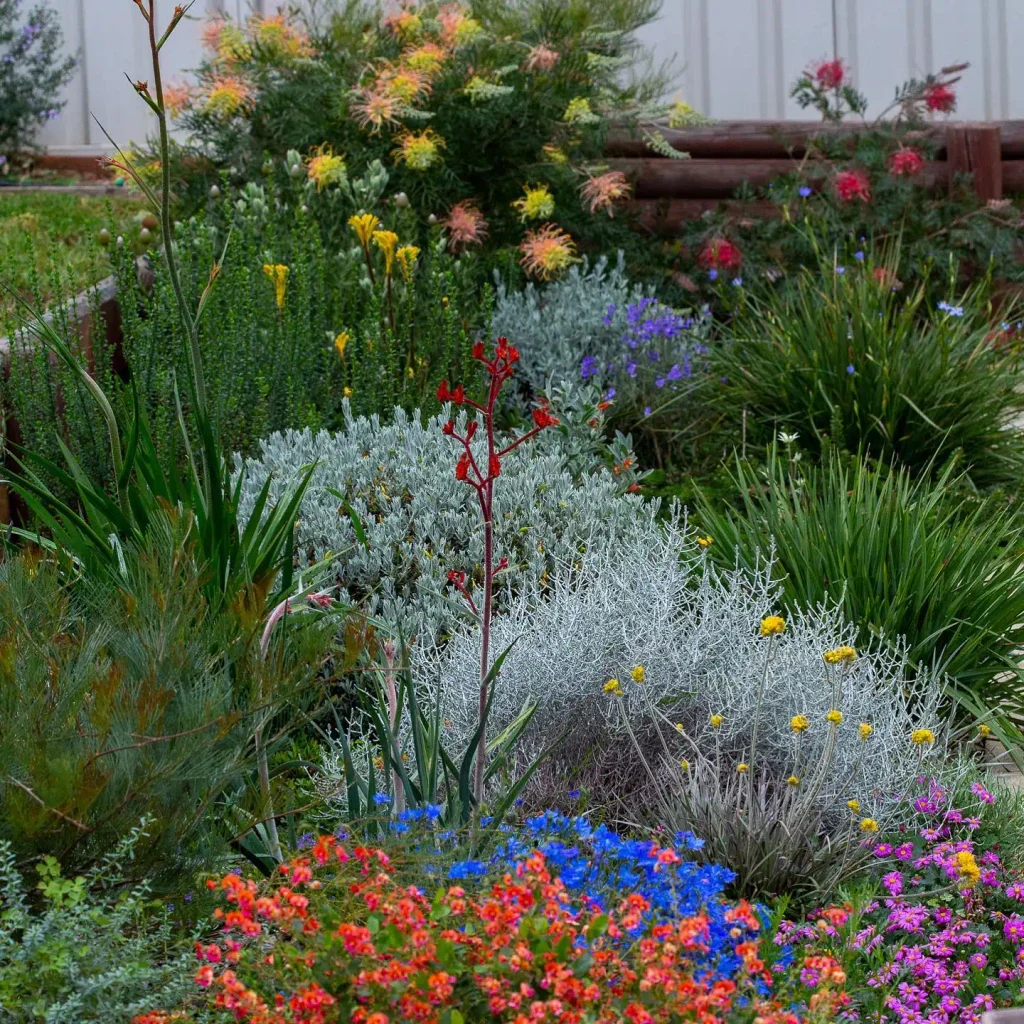
A single red kangaroo paw flower spike stands tall above a dense bed of silver foliage and rainbow blooms. Orange and blue daisies crowd the front, while purple flowers and grevillea blooms add pops of color further back.
Frosty grey shrubs weave through the whole scene, tying the bright colors together. Kangaroo paw thrives in sandy, free draining soil and copes well with coastal wind.
Grey leaved shrubs, like the fine textured plant dominating this bed, reflect sunlight and need very little extra water.
Grouping bold flower colors against silver foliage makes each bloom stand out more clearly. Native plantings like this attract birds and pollinators, adding life to a low maintenance yard.
11. Modern Front Yard with Red Kangaroo Paw Feature
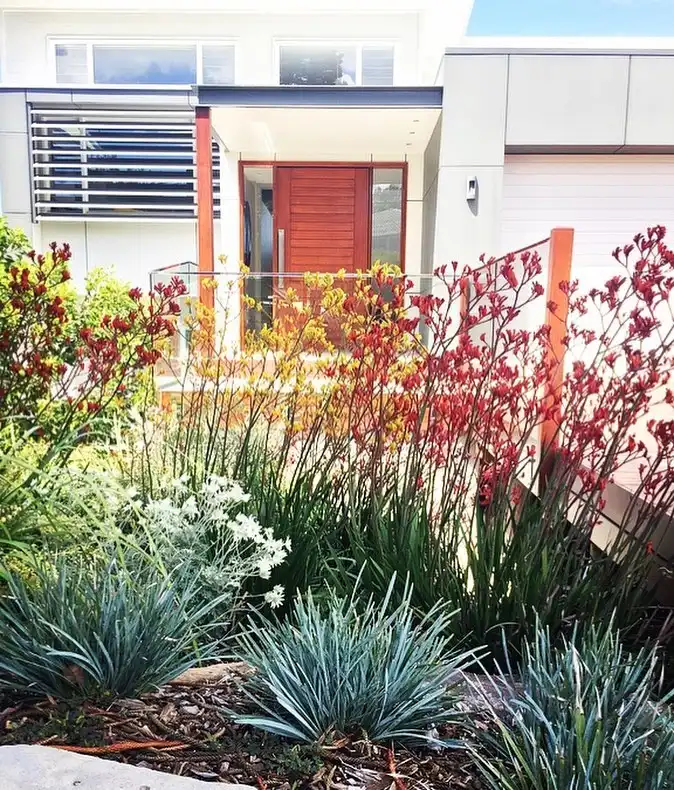
Deep red and gold kangaroo paw spikes shoot up in front of a sleek modern home with a timber front door. Blue tufted grasses and white daisy bushes fill the lower part of the bed, backed by rock mulch and stone edging.
A glass balustrade and warm timber accents echo the reds found in the flowers. Kangaroo paw brings striking vertical color to an otherwise low, flat planting scheme.
Its narrow stems and thin leaves let air move through easily, cutting fungal risk in humid coastal air. Blue fescue grasses beneath add cool contrast and stay compact year round. Rock mulch finishes the look while keeping the sandy base moist for longer between waterings.
12. Silver Foliage Bed with Purple and Orange Blooms

Feathery silver leaves fan out across the front of this garden bed, dotted with small purple flowers. Behind them, a large purple hibiscus shrub blooms heavily against a dark tree backdrop, while a patch of white daisies fills the right side.
Small orange marigold flowers peek through the silver foliage near the base. Silvery leaved shrubs like this one form a natural buffer between brighter flowering plants. Their fine, dusty foliage reflects sun and copes well with poor, sandy ground.
Purple and orange tones against the grey create strong contrast without feeling chaotic. Daisies planted alongside add another layer of texture while keeping the palette fresh and light.
13. Compact Courtyard Garden with Timber Decking
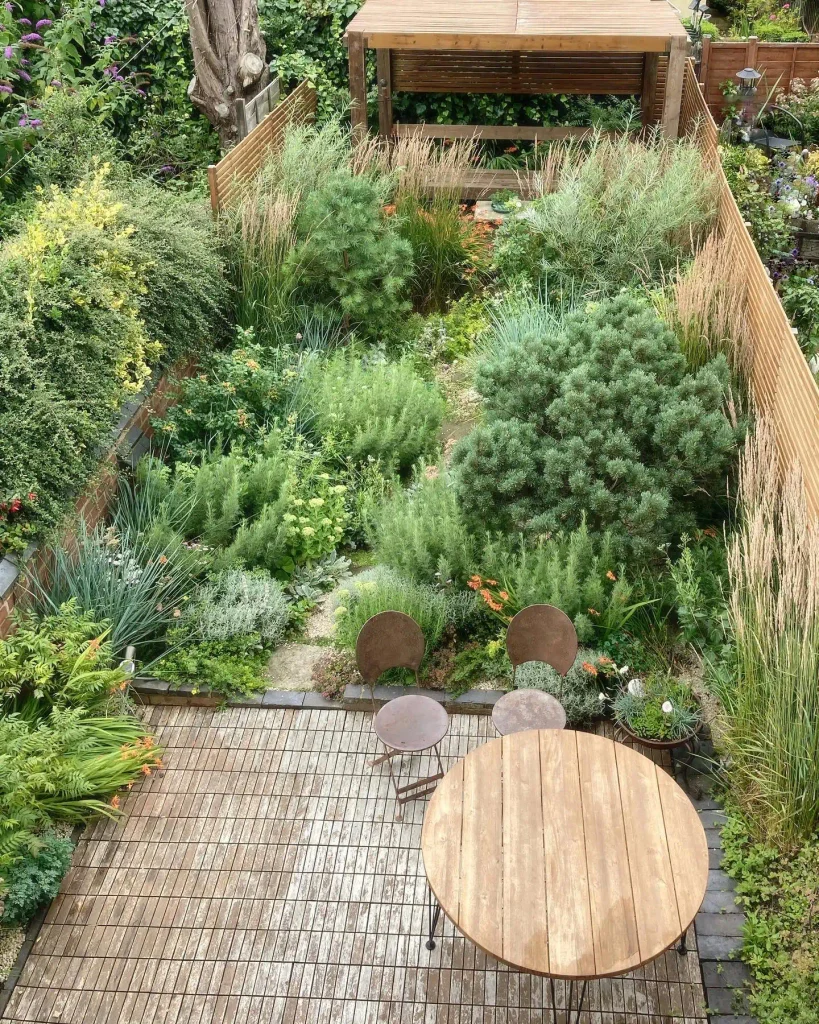
Viewed from above, a small backyard unfolds into a dense green courtyard behind a round timber table and two chairs. Ornamental grasses, a rounded pine shrub, and rosemary spill across narrow garden beds bordered by slatted timber fencing.
A wooden pergola sits at the far end, framed by tall ornamental grasses catching the light. Small backyards benefit from planting that fills every gap without needing wide beds.
Grasses and shrubs of varying heights create a sense of depth in a narrow space. Timber decking bridges the gap between a hardy garden and a usable outdoor seating area. This kind of layout suits compact coastal blocks where every square metre needs to earn its place.
14. Timber Sleeper Bed with Pigface Groundcover
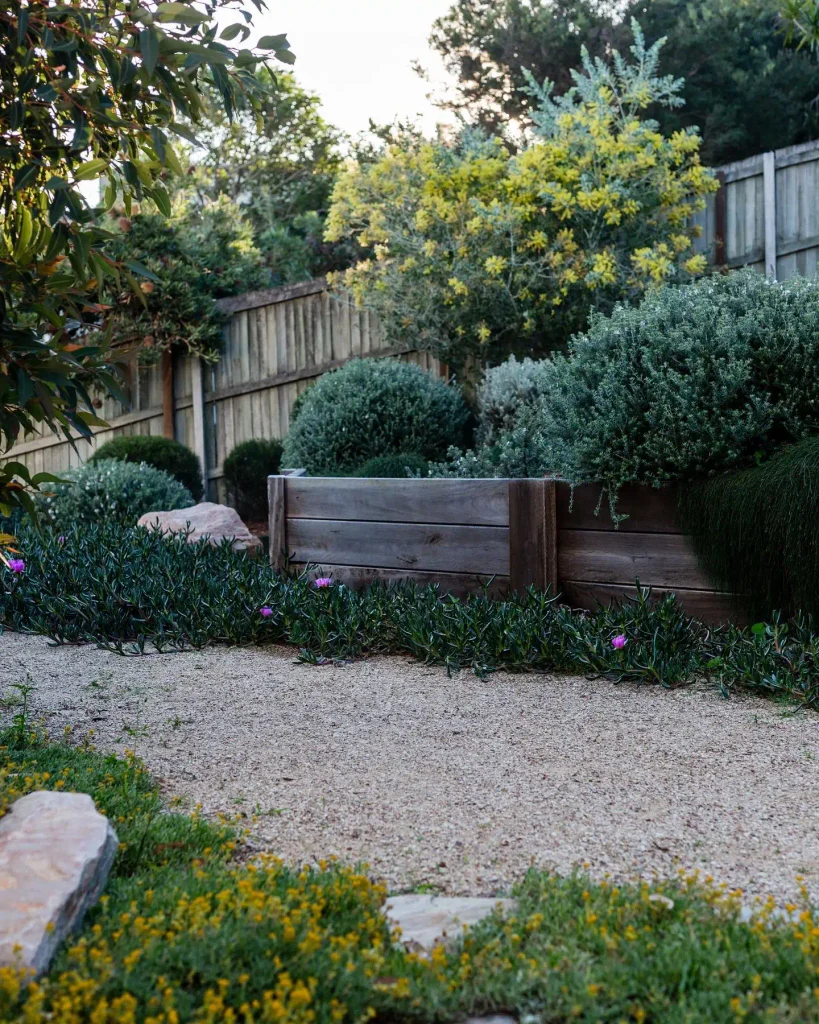
Purple flowering pigface hugs a wide gravel path, growing right up against a weathered timber sleeper wall. Rounded coastal rosemary and westringia shrubs sit above the sleepers, adding soft grey green mounds.
A wattle tree blooms bright yellow further back, next to sandstone boulders scattered along the path edge. Pigface handles sandy soil and salt spray better than most groundcovers, spreading fast to control erosion on slopes.
Its small purple flowers appear against thick, succulent leaves that store water through dry spells. Timber sleepers hold back higher garden beds while adding warmth against the crushed gravel path. Sandstone boulders scattered nearby give the whole scene a natural, beach adjacent feel.
15. White Pebble Driveway Edge with Ornamental Grasses
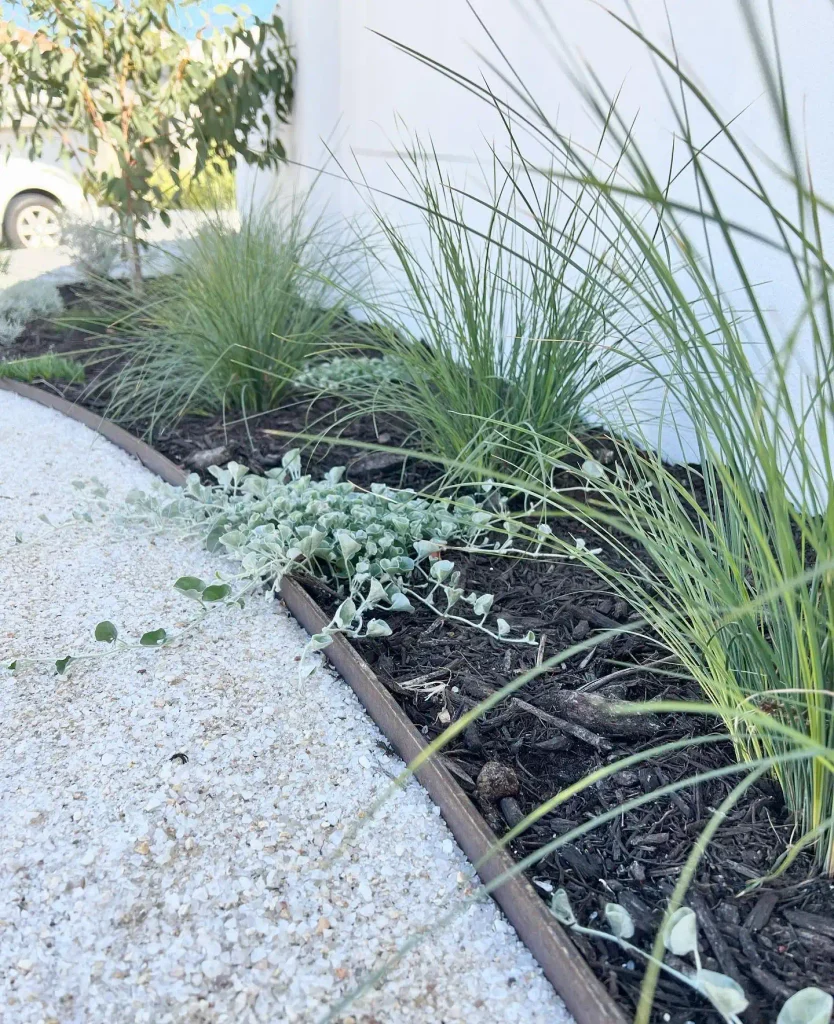
Fine green grasses stand upright along a mulched garden bed, bordered by rusted steel edging and a curved white pebble driveway.
Silver licorice plant trails over the edge, its small round leaves catching the light. Dark bark mulch covers the soil beneath, holding everything neatly in place along the wall of a rendered house.
Grasses like these bring gentle movement to a driveway edge without blocking sightlines for cars. Steel edging keeps loose pebbles separate from garden mulch, cutting down on maintenance over time.
Silver groundcover softens the straight line of the edging as it spills onto the stones. Dark mulch also helps sandy soil hold moisture through long dry stretches near the driveway.
16. Soft Pink Native Flowers Framing a Cottage Entrance
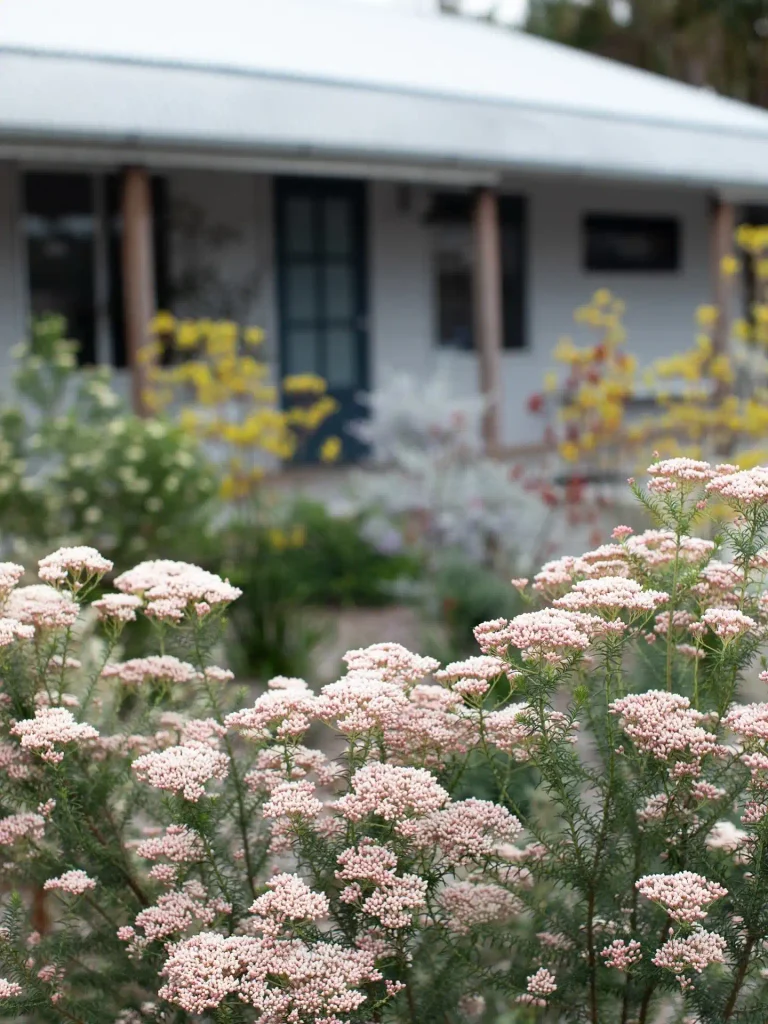
Delicate clusters of pale pink flowers fill the foreground, their fine feathery foliage catching soft light. Behind them, a blurred white weatherboard cottage sits under a grey metal roof, its dark front door flanked by yellow flowering shrubs.
A garden path leads toward the porch through more soft plantings on either side. These fine leaved flowering plants add a gentle, airy layer at the front of a garden bed.
Their pale color works well against darker window frames and doors, drawing the eye toward the entrance. Native flowering shrubs like this one cope with sandy soil and rarely need fertiliser once settled.
Placing them close to the camera also shows how effective they are at softening a straight garden path.
17. Sunken Fire Pit Circle with Native Bush Landscaping
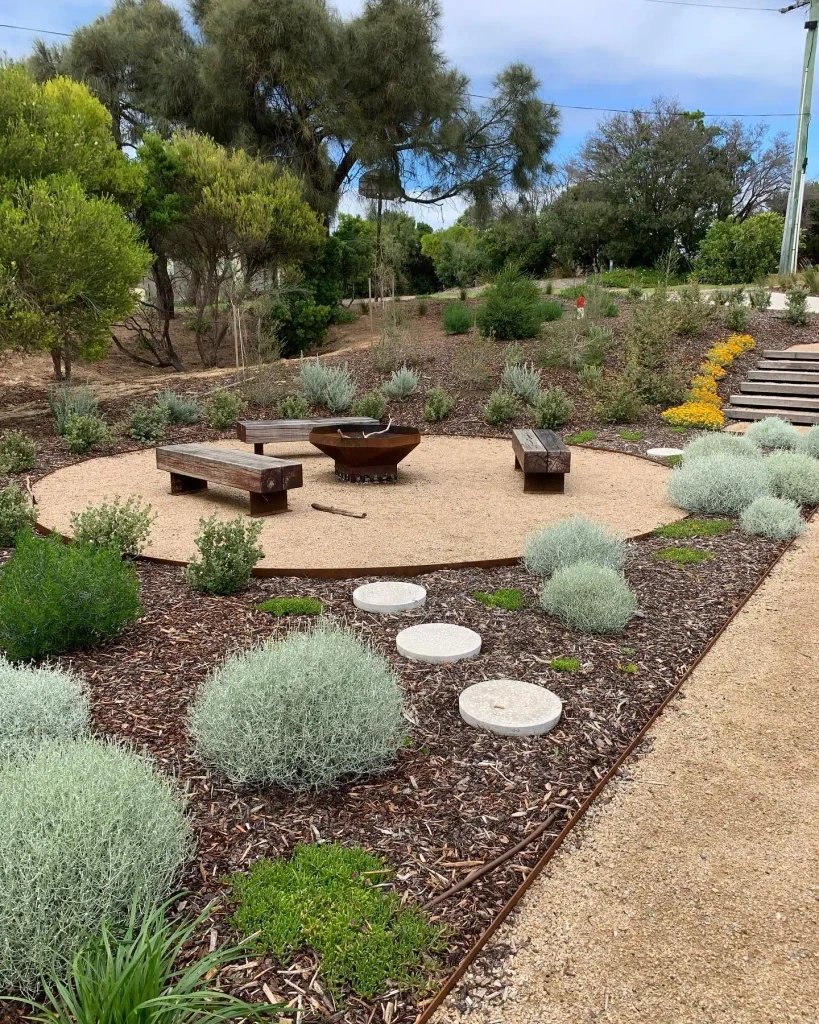
A round gravel clearing holds a steel fire bowl and three timber bench seats, set within a wide bed of silver foliage shrubs and dark bark mulch.
Round concrete stepping pads lead through the planting toward a sandy path, while native trees and shrubs roll across the sloped block beyond. Yellow flowering groundcover adds a splash of color near a set of timber steps.
Gravel gathering spaces work well on dry, sandy blocks because they need no lawn upkeep and stay firm underfoot year round. Grey foliage shrubs planted in loose drifts around the circle need little water once roots settle into the sandy ground.
A steel fire bowl gives the space a clear focal point for evening use. Round stepping pads tie the seating area back to the main path without cutting through the natural planting.